
Replacing or adding baseboards looks straightforward until the scope includes removal, damaged walls, difficult corners, caulking, and paint. No verified San Diego rate source supports a universal per-foot price for this site. The useful comparison is what each written quote includes.
Compare baseboard quotes on the same scope
Measure each wall run and give every pro the same linear-foot total. Then ask whether the quote includes material pickup, waste, fasteners, removal, disposal, wall repair, installation, caulking, primer, and finish paint. A per-foot number that excludes finishing is not comparable with a completed, paint-ready scope.
Short jobs can also be priced as a visit rather than by footage. Ask the independent pro which method applies and get the total in writing before work begins. Fix Pro San Diego does not set the pro’s rate.
MDF vs primed pine vs solid wood, what’s worth the money
The material you choose affects both cost and longevity, and in San Diego’s climate the stakes are lower than in humid regions. Still, each option has a real use case.
MDF (medium-density fiberboard) is a common choice for painted interiors. It has a uniform surface, but exposed edges and damaged finishes need protection from moisture. Ask the supplier for the selected product’s use and installation instructions.
Primed pine provides a real-wood option for paint-grade trim. Board straightness, knots, profile availability, and the required finish can affect material selection and labor.
Solid wood such as poplar or oak may make sense for a stain-grade finish or when matching existing wood trim. Stain-grade work exposes joints and surface differences, so material selection and finishing should be explicit in the quote.
For paint-grade trim that will get touched up over time, MDF or primed pine is the usual choice. For stain-grade or high-traffic areas, compare the extra material cost of solid wood against the written quote. The carpentry and trim work page lists request types so you can match with an independent pro who recommends a material after seeing the rooms.
Removal, prep, and the part that takes the longest
On a project with no existing baseboard, the pro can focus on layout, cutting, fitting, fastening, and finishing. The actual pace depends on the room layout, material, corners, access, and expected finish.
The timeline stretches when there’s removal involved. Prying off old baseboards without damaging drywall can be slow work, especially where trim has several paint layers. Careful removal can become a meaningful part of the scope.
Wall prep adds more time. Baseboards hide the gap between drywall and floor, but they don’t fix wavy or damaged walls. If the wall surface is uneven, the installer has to scribe or shim the board before nailing it, otherwise you get a gap that caulk can’t fully cover. Significant wall damage should be addressed before trim goes in; see our drywall repair service if that’s the situation in your home.
The actual nailing goes fast. A finish nailer seats each board in seconds. The slow part is measuring, cutting, and fitting, especially at inside corners, which need to be coped or mitered precisely.
Stairs, curves, and rounded corners
Standard rooms with 90-degree corners are the easy version of this job. A few situations add real cost and time.
Stairs can require repeated angle cuts and more constrained access at risers and landings.
Curved walls, common in Spanish-style homes throughout San Diego, require either flexible trim (a specialty product) or a series of small straight segments cut at shallow angles to approximate the curve. Both approaches take longer than straight runs.
Rounded drywall corners (bullnose bead) need a different coping technique than square corners. If your home was built or renovated in the 1990s or 2000s, there’s a good chance you have these throughout. They’re manageable but slower.
Show these conditions in photos and require each quote to state how they affect labor and materials.
Caulking and paint touch-up after install
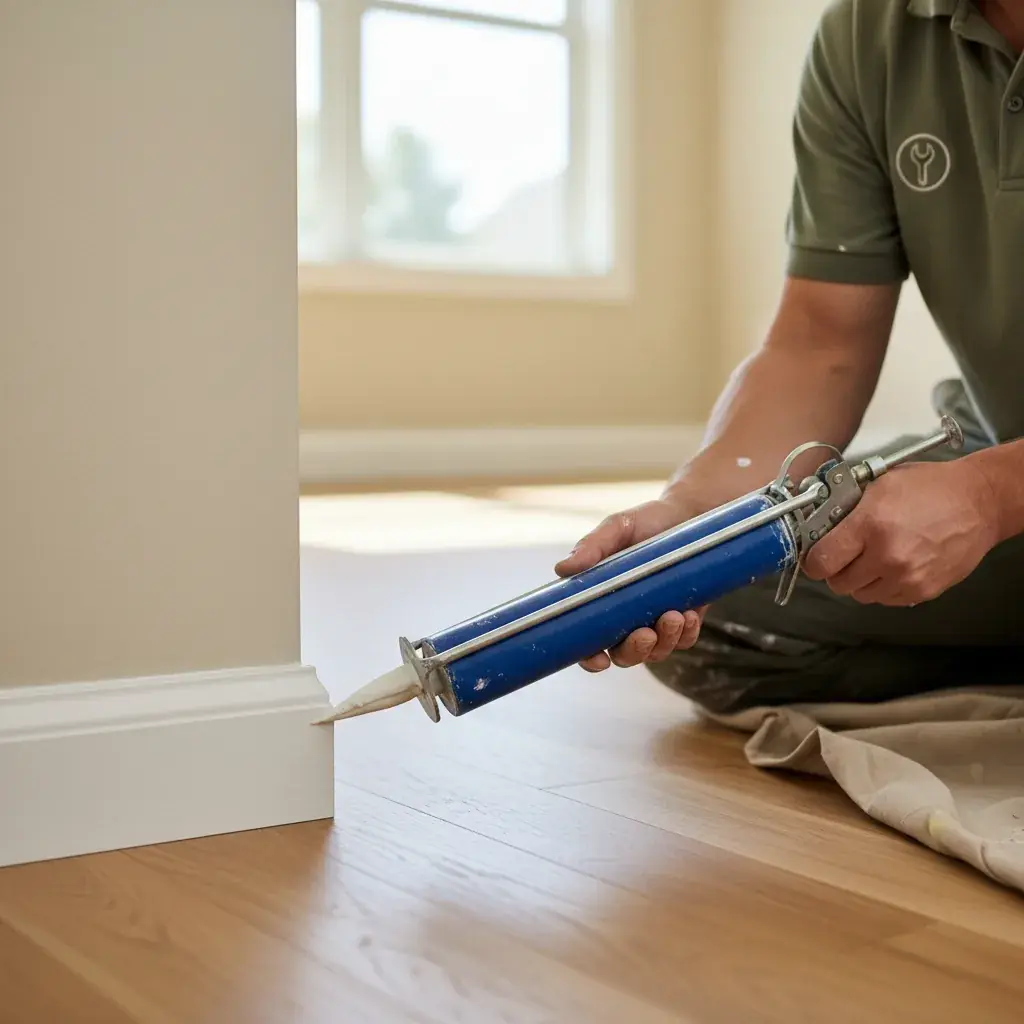
Baseboard installation isn’t truly done when the last nail goes in. Every joint, inside corner, and gap between trim and wall needs to be caulked before paint. Skipping this step is the most common reason DIY baseboard jobs look unfinished, small gaps read as big imperfections once the room is lit.
The selected caulk must be compatible with the trim, adjoining surface, and finish paint. Follow the product label for cure and recoat time rather than assuming every caulk follows one schedule.
After caulking comes paint. Primed MDF and primed pine are ready for a finish coat directly, no additional primer needed. If the baseboards are being painted to match existing walls, the color match matters more than the number of coats. If you want painting quoted with the trim, ask the matched independent pro whether they include it or whether you should request a separate interior painting match.
Some pros separate caulking and paint from installation. Make sure the written quote says whether the trim will be left installed, caulked, primed, or fully painted.
DIY vs handyman: where the math actually breaks even
Baseboards can be approachable for a capable DIYer who already has the tools and understands the wall and corner conditions. Price the exact selected trim, fasteners, caulk, primer, paint, waste, and tool access before comparing DIY with a professional quote.
The math shifts when you factor in tool rental or purchase. Rental prices change by provider and date, so get a current written total that includes deposits and consumables.
On a whole-house job, the tool and time commitment grows along with the footage. Compare the current material and rental totals with the independent pro’s written scope. There is no verified universal break-even footage for San Diego homeowners.
If you’re unsure where your project falls, the DIY vs. professional repair cost data for San Diego breaks down the math across several common job types.
When to call
If your project involves old-trim removal, several rooms, stairs, curved walls, or damaged drywall, ask a pro to inspect the full scope. Call us at (858) 400-4611 and we’ll match you with an independent local pro who provides the quote and contracts with you directly.
Would you rather hand this one to a pro than do it yourself? Call (858) 400-4611.
Request a quote