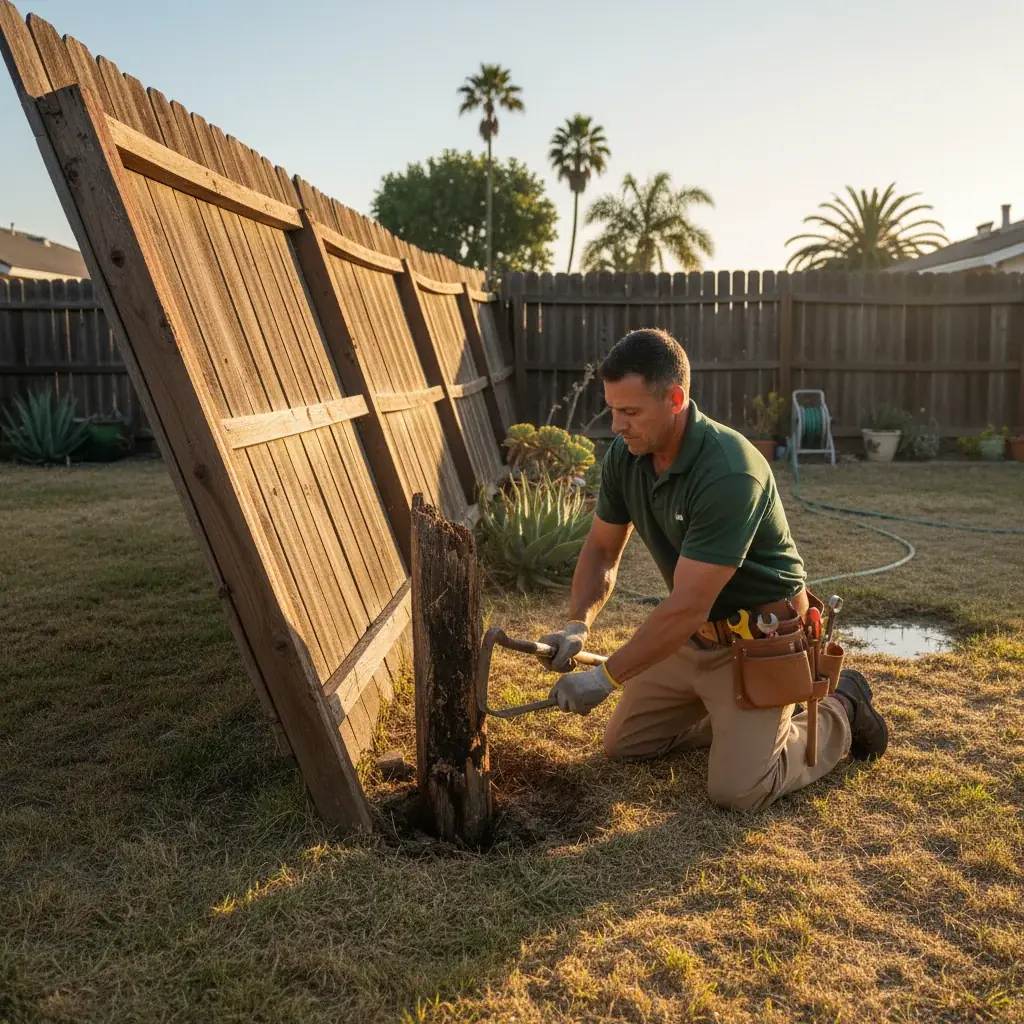
That tell-tale lean in your backyard fence is hard to ignore, especially after a windy San Diego night. Your eye follows the sagging top line, and the immediate thought is often, “Well, time for a new fence.” But replacing an entire fence is a major expense and hassle, and it’s frequently unnecessary. The real decision isn’t just about the one broken board you see; it’s about understanding the fence’s core structure to know if a strategic repair can save you thousands.
The signs that say repair, not replace
Before you start getting quotes for a full tear-down, take a walk along your fence line and look for signs that a targeted fix is the smarter move. A candidate for repair has “good bones”, the majority of the structure is still solid and performing its job. You’re looking for localized problems, not systemic failure.
Signs that a simple fence repair in San Diego is likely your best option include:
- Isolated Damage: Only one or two sections of the fence are showing issues. If 80% of your fence is standing straight and strong, there’s no reason to discard it.
- Superficial Issues: The problems are cosmetic. This includes a few warped or cracked pickets, peeling paint, or surface-level mildew. These are easily addressed without touching the main structure.
- Gate Problems: A sagging gate is usually a problem with its own post or hinges, not the entire fence. Adjusting hinges, re-setting the gate post, or replacing a latch is a straightforward repair.
- A Single Leaning Section: When one part of the fence leans, it almost always points to a problem with a single post, not the panels attached to it.
The quick test is simple: walk the line and push firmly on each fence post. If most are solid in the ground and only one or two wobble, you’re looking at a repair job. If more than a quarter of the posts are loose, the scale starts to tip toward replacement.
When the post is the problem (and why most homeowners miss it)
Here’s the single most important secret to evaluating your fence: homeowners see leaning panels, but the real problem is almost always a failing post. The wooden panels and rails are just passengers; the posts are the foundation. When a post rots at its base or its concrete footing fails, it leans, taking the attached panels with it.
Most people assume the entire section has gone bad, but the panels are often completely fine. The failure happens right at ground level, where moisture is a constant enemy. Wood posts rot from contact with damp soil, and even steel posts set incorrectly in concrete can trap water and rust from the inside out.
To diagnose a post issue, you don’t need special tools.
- Clear the Base: Use a small trowel to clear away soil, grass, or mulch from the base of the wobbly post.
- Inspect for Rot: Poke the wood at and just below ground level with a screwdriver. If it’s soft and spongy, you’ve found the rot. For metal posts, look for deep, flaking rust.
- Check the Footing: A properly set post should be encased in a solid concrete footing. If the post moves within the concrete, or if there’s no concrete at all, the installation was faulty.
The good news is that a single failing post doesn’t condemn your whole fence. The pro can often save the existing panels, dig out the old post and its failed footing, and set a new, solid post in its place. For posts with rot just at the base, a steel brace can sometimes be installed to reinforce it, saving even more time and money. This type of structural fix falls under our deck and fence repair services and can extend the life of your fence for many more years.
Wood, vinyl, chain link, repair economics by material
The decision to repair or replace also depends heavily on what your fence is made of. Each material has its own logic when it comes to the cost and feasibility of a fix.
Wood Fences
Wood is the most common and generally the most repairable fencing material in San Diego. Whether it’s cedar, redwood, or pressure-treated pine, sourcing individual boards and posts is simple. A skilled handyman can perform invisible carpentry work, replacing a rotted post, a few cracked pickets, or a warped rail. The main challenge is weathering; a new, bright wood board will stand out against an older, greyer fence. Sometimes this can be managed with a cleaning and staining of the whole fence, which is good maintenance anyway. Economically, repairing wood fences almost always wins over replacement for localized damage.
Vinyl (PVC) Fences
Vinyl is durable and low-maintenance, but it’s much harder to repair gracefully. The panels often lock together in specific, sometimes proprietary, ways. If a panel cracks from an impact or becomes brittle from sun exposure, you can’t just patch it. You have to replace the entire section. The biggest challenge is finding a perfect match. A vinyl fence installed 10 years ago might be a slightly different shade of white or have a different texture than what’s available today, making the new section stick out. Repair is possible, but it’s often more about section replacement.
Chain Link Fences
Chain link is highly repairable and cost-effective to fix. If a car bumps a section, the posts and top rail can often be bent back into shape or easily replaced. If the mesh fabric is cut or damaged, a new section can be “woven” in to replace the old one. Rust is the primary enemy, but as long as it’s confined to one or two posts, they can be swapped out without disturbing the rest of the fence.
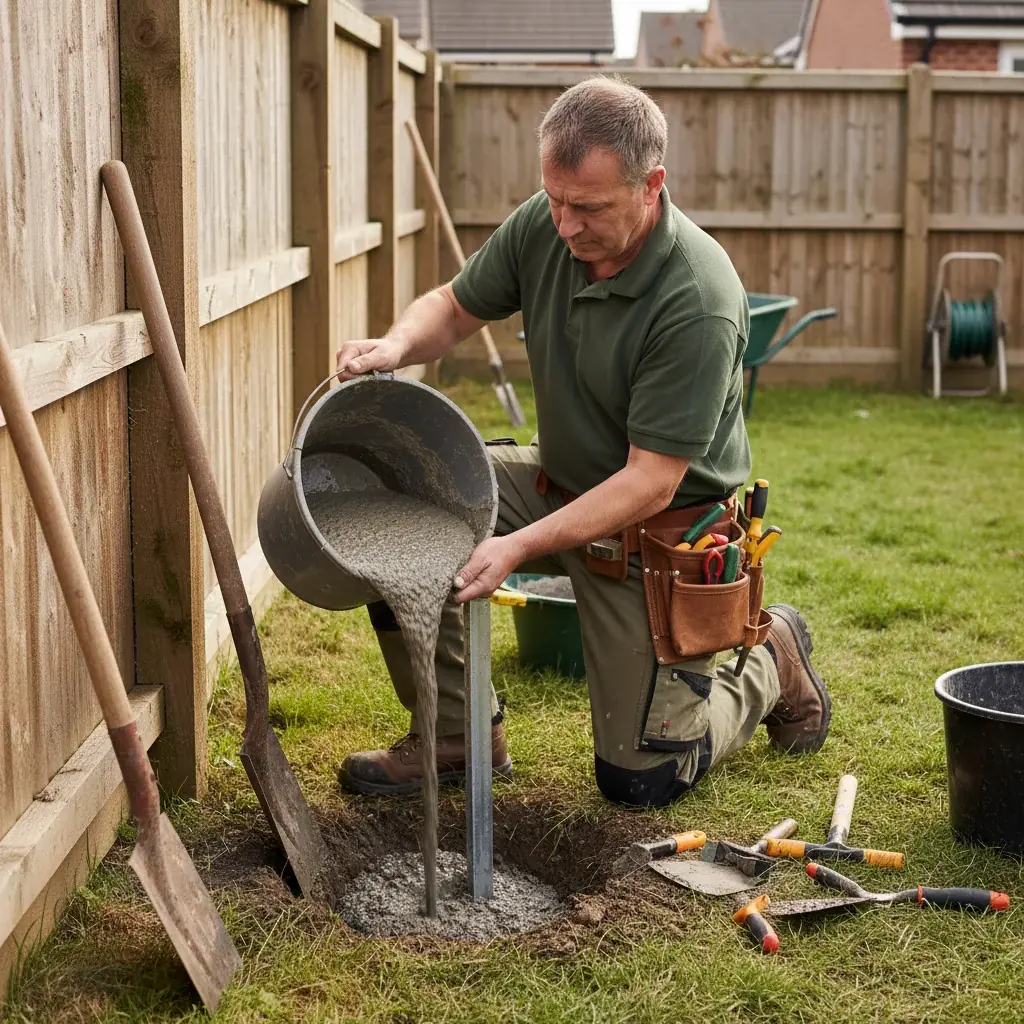
San Diego rot patterns: coastal salt, inland sun, irrigation overspray
Living in San Diego County means your fence faces unique environmental pressures that vary dramatically by neighborhood. Understanding these local patterns helps you diagnose the root cause of your fence’s failure.
In coastal areas like Coronado, La Jolla, and Point Loma, the constant salt air is the biggest threat. While it doesn’t rot wood directly, it accelerates the corrosion of every piece of metal on your fence. The nails, screws, and brackets holding your wood fence together can rust away, causing boards to fall off even when the wood itself is fine. For chain link, the galvanized coating is put to the test daily. When quoting repairs in these areas, ask the professional which stainless or hot-dip galvanized fasteners they intend to use against the marine layer.
Head inland to communities like Escondido, Santee, or Alpine, and the enemy changes from salt to sun. The intense, dry heat bakes the moisture out of wood fences, leading to splitting, cracking, and severe warping. The relentless UV radiation breaks down the protective qualities of stains and sealants, leaving the wood exposed. For vinyl fences, this same UV exposure can make the material brittle over time, more prone to cracking from a minor impact.
The most common culprit across all of San Diego, however, is irrigation overspray. A misaligned sprinkler head that wets the base of a fence post every morning keeps the wood damp and feeds fungus and termites. This is a common cause of premature post failure from Chula Vista to Oceanside.
Permit thresholds and HOA design rules
Before you start any significant fence work, check two layers of rules: the building department and any HOA.
Simple board or post repairs may be treated as maintenance in some jurisdictions. Replacement, a height change, or a new location often is not. Confirm the current requirement with City of San Diego Development Services for a city address, or with San Diego County PDS Building for unincorporated county land. Other cities set their own rules.
HOAs in planned communities can dictate material, color, height, and style. Get written architectural approval before work starts if the property has an HOA.
Cost comparison: repair vs full replacement
Fix Pro San Diego does not publish a per-post or per-linear-foot fence menu. Ask the quoting professional to separate post replacement, board runs, gate hardware, and a full-line replacement if both scopes are on the table. Name linear footage, material, and whether footings come out.
A small repair can postpone a full replacement when the rest of the line is still sound. That is a site judgment, not a savings table. For related outdoor carpentry context, see deck repair costs.
When a matched pro should inspect
If posts show widespread rot, or a large share of the line is damaged, ask for a replacement quote alongside a repair quote. A single wobbly section, a few broken boards, or a gate that will not close is often a repair ticket. Call (858) 400-4611. Fix Pro San Diego matches homeowners with independent local professionals across San Diego County.
Would you rather hand this one to a pro than do it yourself? Call (858) 400-4611.
Request a quote