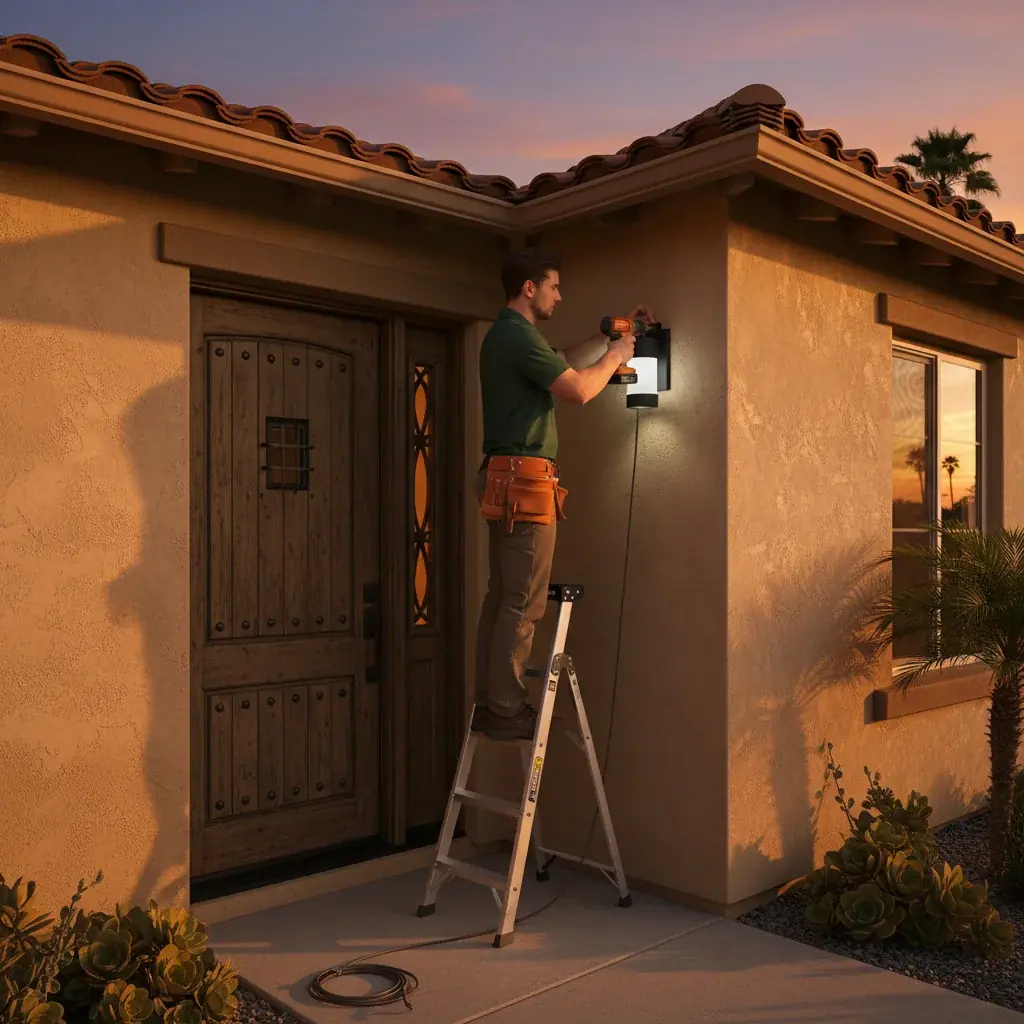
Outdoor light fixture installation quotes in San Diego change with the wet-rated versus damp-rated choice and the demands of stucco mounting. Wet-rated fixtures suit direct rain or splashing, while damp-rated models belong in sheltered locations. Before booking, you’ll want the pro to confirm the mounting surface, existing box, weather sealing, fixture rating, and access.
Why outdoor fixtures fail faster on the coast
San Diego’s climate, while seemingly mild, is surprisingly harsh on outdoor light fixtures. The intense UV radiation breaks down plastics, fades finishes, and compromises seals, leading to brittle components and water intrusion. Even more insidious is the constant presence of salt in the air, especially closer to the coast. Salt accelerates corrosion on metal components, causing rust, pitting, and eventual electrical failures. Many standard fixtures designed for inland environments simply aren’t built to resist this corrosive attack.
Beyond sun and salt, humidity and condensation, even without direct rain, can seep into poorly sealed fixtures. This internal moisture corrodes electrical wiring and contacts, often leading to flickering, short circuits, or complete failure. Temperature swings, though less extreme than in other regions, also contribute to material fatigue. Choosing fixtures made from marine-grade stainless steel, solid brass, copper, or high-quality, UV-resistant composites is essential for longevity here. A standard fixture designed for less demanding climates might only last a year or two before showing significant wear.
Wet-rated vs damp-rated, and where each one belongs
When selecting outdoor lighting, understanding the difference between wet-rated and damp-rated fixtures is critical for both safety and durability. These ratings, certified by organizations like UL, indicate a fixture’s ability to withstand moisture. Damp-rated fixtures are suitable for areas protected from direct exposure to rain or splashing water, but where condensation or indirect moisture might occur. Think covered porches, beneath deep eaves, or enclosed patios with significant overhangs. They offer protection against humidity and damp conditions.
On the other hand, wet-rated fixtures are designed to withstand direct contact with rain, snow, water spray, or other liquids. These fixtures feature sealed housings and gaskets that prevent water from reaching internal electrical components. For San Diego homes, wet-rated fixtures are often necessary for uncovered decks, pergolas, path lights, and any wall-mounted lights without substantial overhead protection. Even seemingly sheltered areas can experience wind-driven rain or ocean spray. Using a damp-rated fixture in a wet location is a recipe for premature failure and potential electrical hazards. Match the fixture rating to the moisture exposure at that location.
Mounting on stucco, wood siding, and soffit
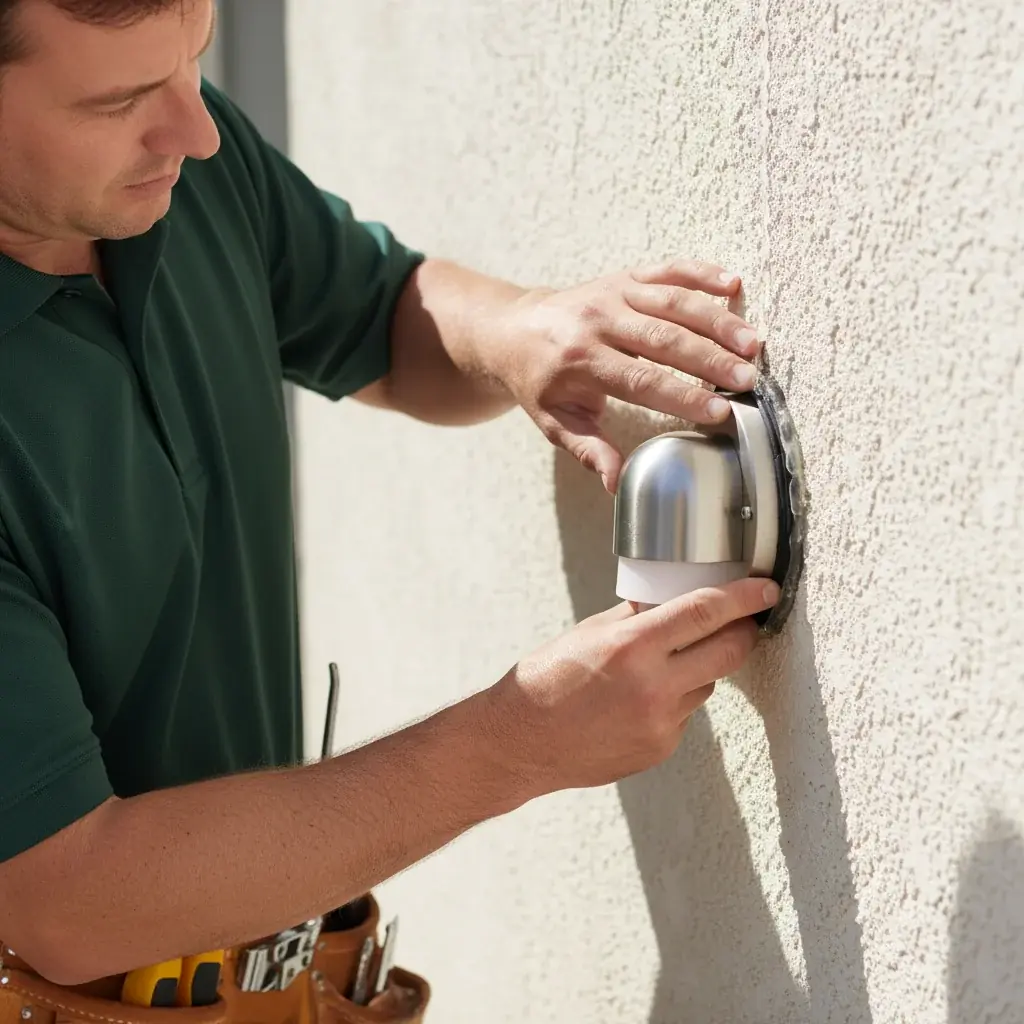
San Diego homes feature a variety of exterior finishes, each presenting different mounting and weather-sealing conditions. The installer should identify the wall assembly, follow the fixture and box manufacturers’ instructions, and include any stucco or finish repair in the written scope. Related planning considerations appear in the TV mounting on stucco guide.
Wood siding and soffits also require product-approved support, boxes, fasteners, clearances, and weather sealing. If the surface is damaged, list the needed general repair or caulking and sealing separately from the electrical scope.
Sconces, path lights, and string-light hardware
Outdoor lighting comes in many forms, each serving a distinct purpose and requiring specific installation considerations. Sconces are wall-mounted fixtures that provide both ambient and task lighting for entryways, patios, and garage areas. When a sconce goes in, light direction (up, down, or both) and how it complements the home’s architecture belong in the plan. Their mounting needs are highly dependent on the wall material, as discussed previously, with a focus on weatherproofing.
Path lights are low-voltage fixtures designed to illuminate walkways, garden beds, and landscape features. New low-voltage wiring and transformers belong with a licensed electrician. Replacing an existing path light on existing wiring is still electrical work; ESFI strongly recommends hiring a qualified, licensed electrician to perform any electrical work in your home. Placement, fixture security, and coastal wind exposure should be in the quote. For a more ambient and festive feel, string lights are a popular choice. Heavy-duty hooks, posts, and anchors that can withstand coastal winds keep the strings tensioned. Choosing commercial-grade, weatherproof string light systems is also key for longevity. Whatever your outdoor lighting needs, from functional security lights to decorative accents, start with the light fixture service page.
LED bulbs, dusk-to-dawn sensors, and smart switches
Modern outdoor lighting goes beyond simply illuminating your exterior; it integrates smart technology for convenience, energy use, and security. LED bulbs last longer than many older lamp types and reduce how often hard-to-reach fixtures need a change. Confirm current energy-code or utility program rules for the fixtures you buy.
Integrating dusk-to-dawn sensors automates exterior lights so they come on after dark and turn off at sunrise. For even greater control, smart switches and smart-enabled fixtures allow you to control outdoor lighting from a phone, set schedules, or connect them to a larger home system. The independent pro should confirm compatibility with the existing electrical setup and weatherproof any exposed sensors.
What changes an outdoor fixture quote
The cost of outdoor light fixture installation in San Diego can vary depending on several factors. These include the type and number of fixtures, the complexity of the mounting surface, accessibility, and the electrical work required. Generally, replacing an existing outdoor fixture is the most straightforward option. This involves disconnecting the old fixture and installing a new one in the same location, reusing existing wiring and junction boxes. Time still varies with fixture size and the mounting surface.
An existing box does not by itself establish that the support, wiring, location, or fixture is suitable. ESFI strongly recommends hiring a qualified, licensed electrician to perform any electrical work in your home. Ask the matched professional to state every electrical, mounting, sealing, and finish item in a written quote.
Ready for a quote
Call (858) 400-4611 and we’ll match you with a professional who can inspect the fixture, box, wall, exposure, and access before quoting. Verify the electrical professional through the CSLB.
Would you rather hand this one to a pro than do it yourself? Call (858) 400-4611.
Request a quote