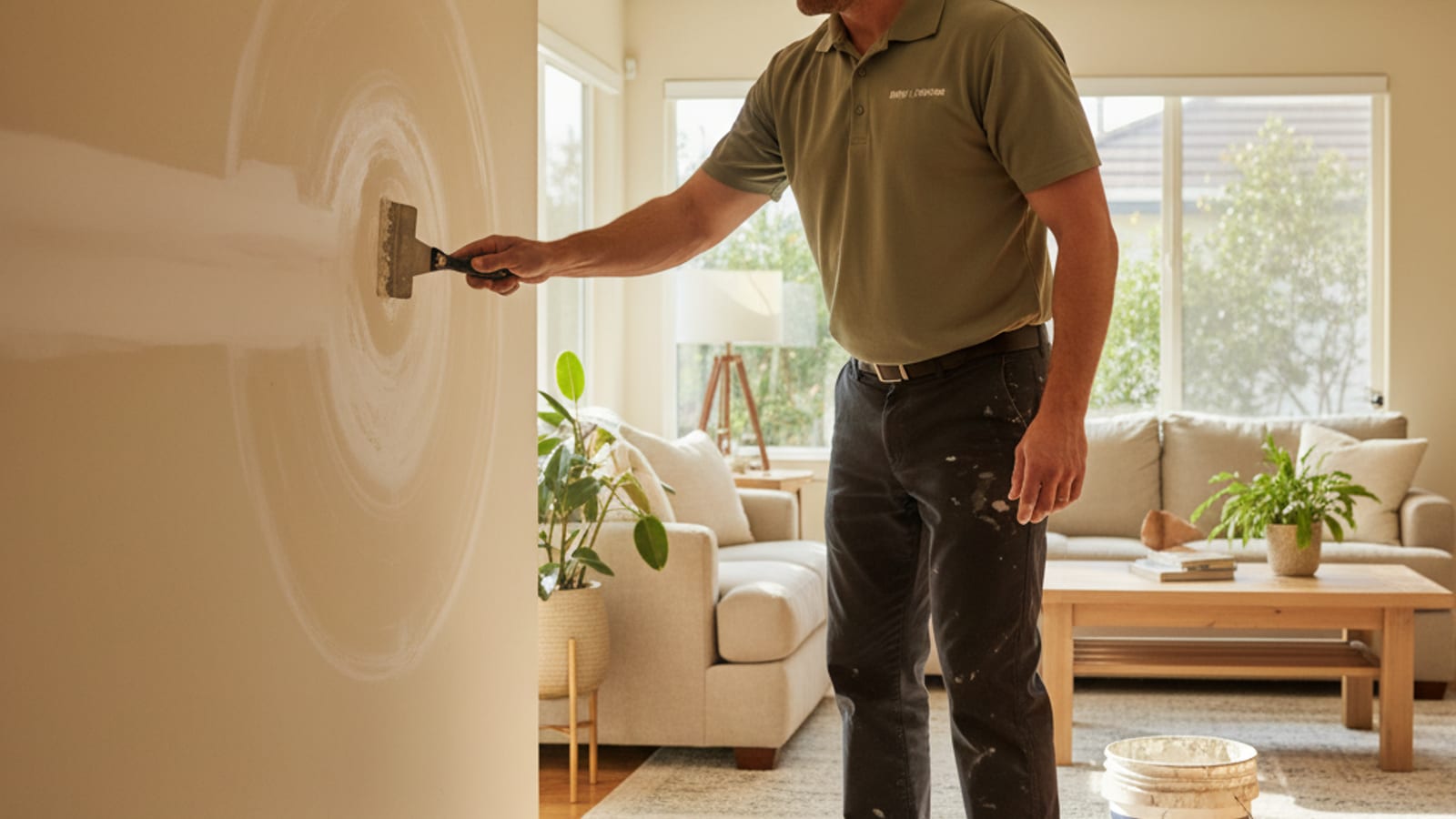
Drywall repair is one of those costs that surprises people. It seems like it should be cheap, but the final invoice is higher than expected. That’s because the visible part of a drywall repair (filling the hole) is usually the fastest part. The time-consuming work is everything around it: prep, tape, mud coats, drying, sanding, texture matching, and paint.
No approved source establishes a universal San Diego price table for this site. Here is how to define the scope that drives a quote.
Small holes and nail pops
The least expensive category covers holes up to about two inches, nail holes, small anchor pulls, doorknob dings that just barely broke through the paper face.
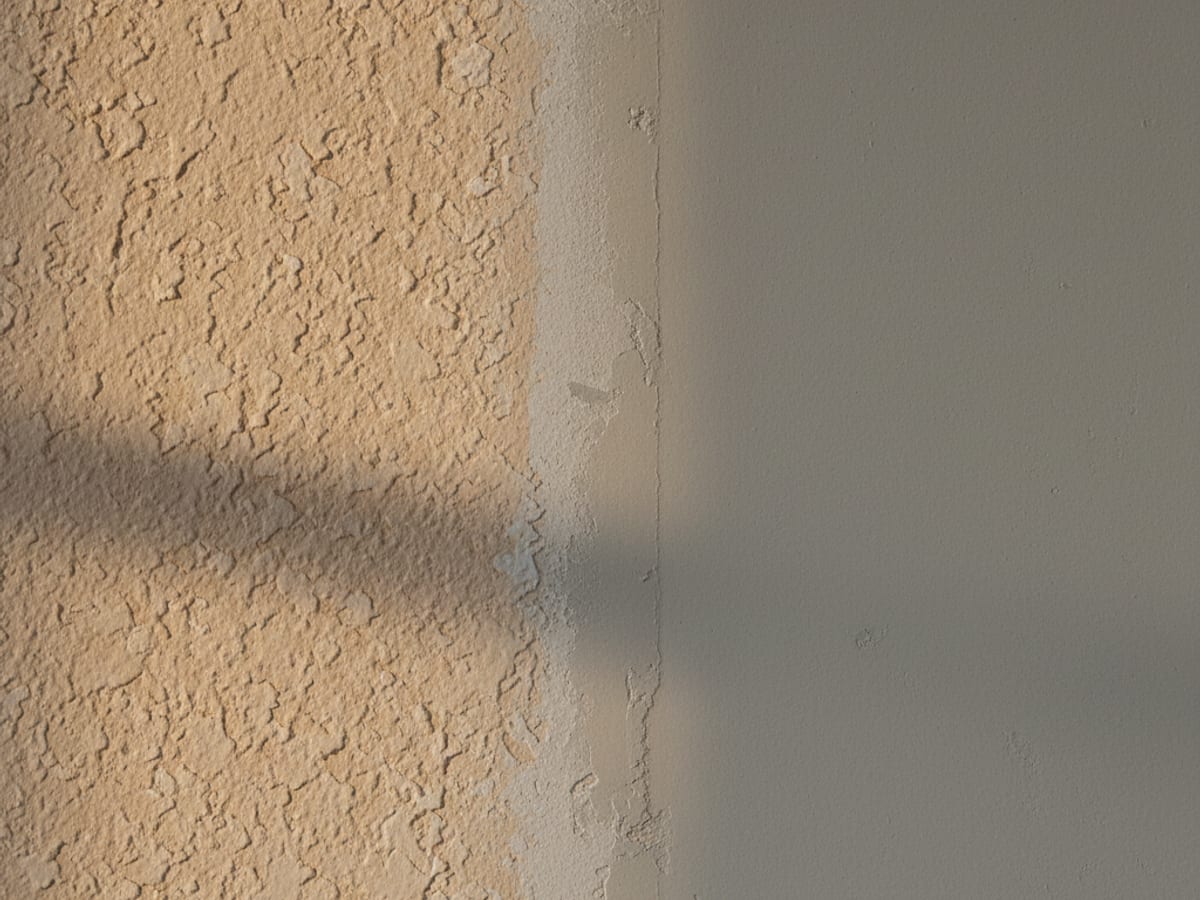
These are typically fixed with a patch kit or a small amount of setting compound, sanded smooth, and textured to match. On a flat wall with no texture, this is fast. On a wall with skip trowel, orange peel, or knockdown texture, a skilled handyman can still match it well, but it takes more time.
Count each damaged area and identify its room, texture, and paint boundary. Several holes in one room can describe a different scope from repairs scattered throughout the property.
Openings that need a supported patch
Holes in this range, from doorknobs punching through, small hardware installs that went wrong, or a pulled outlet box, typically require a California patch or a small backer board repair, a few coats of compound, and texture work.
The patching material and product instructions determine drying and recoat time. Ask the pro whether the sequence needs a return visit and which finishing stages are included.
Larger openings and section repairs
Once you’re cutting out a section of drywall to replace it, costs go up for a few reasons. The repair requires a clean cut, a backer strip or blocking added behind the opening, a new piece of drywall cut to fit, three to five coats of compound over the seams and screw dimples, and texture work across a larger area.
As the repair boundary grows, texture and paint boundaries become more visible. Ask whether the quote covers the patch alone, texture blending, primer, spot paint, or paint to a natural wall boundary.
Water-damaged drywall
Water damage changes the scope significantly. First, the source of the water has to be addressed before any drywall work starts. Patching over active moisture leaves the source unresolved and can damage the replacement material.
Once the source is fixed, an appropriate professional should determine what wet material must be removed and whether remediation is needed. The post-repair scope may include insulation, drywall, joint treatment, texture, primer, and paint, but it should list only the work actually required.
If the water reached framing or an exterior opening, the customer may need a qualified assessment beyond a drywall surface repair.
Safety: Do not press or stand beneath sagging ceiling material. Keep people away from the area and ask an appropriate professional to assess it.
San Diego-specific factors
Some older San Diego homes, particularly builds from the 1950s to 1970s, have interior walls finished with plaster or a sand-finish stucco rather than modern drywall. Repairing these requires a different approach and often more time to match the existing texture.
In communities managed by an HOA, you may need documentation that a contractor completed the work. Get a receipt and a brief description of work done.
Matching an existing textured ceiling can change the scope. Before disturbing older ceiling material, use an appropriately qualified asbestos professional or current government guidance to determine whether testing is needed. Do not rely on a construction-year shortcut or an unsourced test price.
What a quote should include
A complete drywall repair quote should specify the size and number of holes being addressed, the number of compound coats, whether texture matching is included, and whether paint is included. If paint is separate, make sure you understand that the final result may need paint over it before it’s fully invisible.
If the repair is the first step before a full-room paint, ask the independent pro whether painting belongs in the same quote once the patch has cured.
Texture, primer, and paint may be included or excluded by the independent pro. Require the written quote to state each boundary. Call (858) 400-4611 and we’ll match you with a pro who can inspect and quote your drywall repair.
Would you rather hand this one to a pro than do it yourself? Call (858) 400-4611.
Request a quote