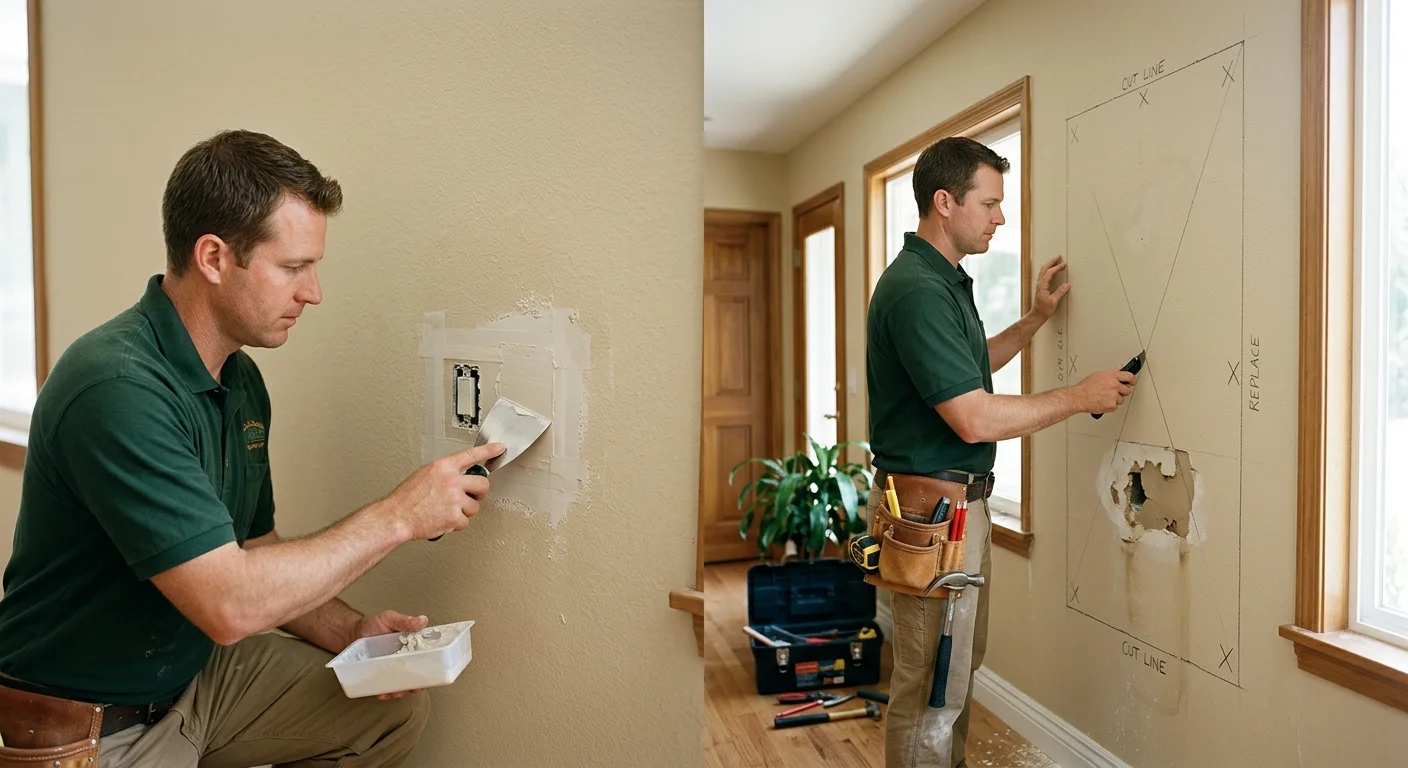
Searching for a “drywall patch near me” usually starts with one decision: patch the damaged spot or replace a larger drywall section. A small, isolated hole may need only a patch. Soft material, spreading cracks, or damage across several areas may call for a wider repair.
When a small drywall patch is enough
A patch may be enough when the damage stays within firm, stable drywall. Common examples include an abandoned wall anchor, a small impact hole, or a limited access opening. The surrounding surface should look intact without additional cracks or loose sections.
Size matters, but it doesn’t decide the repair alone. A narrow opening with crumbling edges may need a wider cut. A larger opening with clean, stable boundaries may still accept a localized repair. The important question is how far the damaged material extends.
Look around the opening before covering it. Check the face paper, nearby texture, seams, corners, and trim. Note whether the damage appeared once or keeps returning. A patch can hide a hole, but it won’t explain movement or another condition behind the surface.
Permit rules also depend on the address and project. City of San Diego Information Bulletin 203 lists drywall patches up to 100 square feet related to electrical, mechanical, or plumbing repairs among work not requiring a building permit. The exception doesn’t apply to designated historical resources or properties within historic districts.
That guidance is specific to the City of San Diego. It doesn’t confirm the rule for Chula Vista, La Mesa, El Cajon, or another local jurisdiction. Check with the agency serving the property before work begins.
A homeowner comparing drywall patching services should describe both the opening and the surrounding wall. That gives the pro a better starting point than the hole’s width alone.
Signs damage extends beyond the visible hole
The visible opening may not show the full repair boundary. Inspect the drywall several inches beyond it without pulling or cutting anything. Soft areas, loose facing paper, discoloration, raised edges, and connected cracks all deserve attention.
Repeated cracking is especially useful information. Mark the ends lightly with removable tape, then photograph them. If the line returns after an earlier repair, tell the pro. The new scope may need to include more than another coat of joint compound.
Damage near a seam, corner, ceiling line, door, or window also changes the decision. These locations have nearby edges and finish transitions. A repair pro may need to inspect how the damaged area meets those boundaries before choosing the cut.
Past repair work can hide useful clues. Watch for a different texture pattern, a raised rectangular outline, or paint sheen that changes around the hole. Those signs don’t prove the earlier repair failed. They do show where someone may have opened or refinished the wall before.
When plumbing, electrical, or mechanical work created the opening, tell the drywall pro whether that work is complete. The finish scope shouldn’t be guessed while access may still be needed. Share any information given by the person who opened the wall.
Our guide to types of drywall damage in San Diego can help you describe what you see. Use plain observations rather than diagnosing the cause. “The lower edge feels soft” is more useful than assuming every dark mark has the same source.
How a repair pro decides where to cut
A repair pro starts by locating stable drywall around the damaged area. The goal is to remove material that can’t support the new finish while preserving sound wall surface. The final opening may be larger than the original hole.
The pro may check the edges, nearby seams, and available support behind the wall. A clean repair needs a secure place for the replacement piece or backing. If the original opening lands in an awkward position, widening it can create a more workable boundary.
There are several possible scopes. A localized patch may cover an isolated opening. A wider patch may remove torn paper and weak edges around it. Panel-section replacement may make more sense when damage crosses a broad area, reaches multiple openings, or affects an existing seam.
“Panel replacement” doesn’t always mean removing every sheet on that wall. Ask the pro to identify the planned cut lines. The answer should name the affected section, nearby trim, texture work, and painting area.
Also ask what will remain in place. Cabinets, baseboards, outlet covers, wall-mounted items, and adjacent finishes can affect access. Photograph those features before requesting a quote. A straight-on image often hides how close the hole sits to another surface.
Get the proposed repair scope in writing before approving the work. Compare whether each quote includes the same cutting, patching, texture, preparation, and painting boundaries. A lower figure may describe a smaller scope rather than the same repair.
Fix Pro San Diego can match homeowners with licensed, independent local handyman pros. We’re a referral service and don’t perform the repair. You’ll contract with and pay the selected professional directly. You can also check a contractor through the CSLB license lookup.
Why texture and paint matching change the scope
A structurally sound patch can still remain visible after finishing. Texture and paint determine how the repaired area blends with the surrounding wall. Both should be discussed before the pro quotes the job.
Start by identifying the existing finish. It may be smooth or have a raised spray, flattened pattern, hand-applied look, or earlier patch texture. Photograph it from the side with daylight or a nearby lamp crossing the surface. Straight-on lighting can flatten the pattern in a photo.
Texture matching may require space beyond the cut itself. The pro may feather the new finish into the surrounding surface instead of stopping at the patch edge. Ask how wide that finish area could become and what furniture or wall hangings should be moved.
Paint creates another boundary decision. A matching color formula may still look different because sheen, surface condition, and existing paint can vary. If you have the original can, photograph its label and finish. Don’t assume the remaining paint is ready for use. Let the pro inspect it.
Corners, doors, windows, cabinets, and trim provide natural stopping points. A pro may suggest painting to one of those boundaries when a small spot treatment would remain noticeable. Ceiling work can raise the same issue because broad light can reveal changes in texture or sheen.
Historic review can also affect an otherwise minor City of San Diego project. Bulletin 203 excludes designated historical resources and properties inside historic districts from its listed permit exemptions. If the property’s status is uncertain, confirm it with the City before relying on the drywall-patch exemption.
Texture and paint should appear as separate items in the proposed scope. That prevents “patching” from being mistaken for a fully blended wall finish.
What to photograph before requesting a quote
Good photos help a repair pro understand the likely boundary before visiting. They don’t replace an in-person inspection, but they can prevent important details from being left out of the first conversation.
Take these views:
- One wide photo showing the entire wall or ceiling.
- One straight-on photo centered on the damaged area.
- One angled photo showing lifted edges and surface depth.
- One side-lit photo showing the existing texture.
- One close photo with a ruler beside the opening.
- One photo showing nearby corners, trim, outlets, or fixtures.
- One photo of any older patch outline or connected crack.
Don’t send only a tight close-up. A small hole beside a cabinet, ceiling edge, or window can require different access than the same opening in an empty wall. The wide image gives that context.
Add a short written note. State whether the damage is on a wall or ceiling. Mention what caused it if that’s known. Describe any softness, discoloration, loose paper, or crack movement you observed. Say whether another trade opened the wall and whether that work is finished.
Include the room and property location. A San Diego address may fall under City guidance, while another San Diego County city may use a different agency. If the home may be historically designated or within a historic district, mention that before the scope is settled.
Photograph paint labels, leftover materials, and the surrounding texture. Note whether you want only the opening closed or the repaired area painted to a clear boundary. Those are different scopes, so the quote should say which one applies.
For more context on bid variables, read our San Diego drywall repair cost guide. We don’t set a pro’s prices or quote the work. The independent professional decides the scope and provides the quote directly.
When to call
Hand the repair to a pro when the drywall feels soft, cracks keep returning, or the finish must blend across a visible wall or ceiling. It’s also worth getting help when you can’t tell whether the damage stops at the hole or extends farther.
Call us at (858) 400-4611 and we’ll match you with a local pro who quotes the job before starting.
Would you rather hand this one to a pro than do it yourself? Call (858) 400-4611.
Request a quote