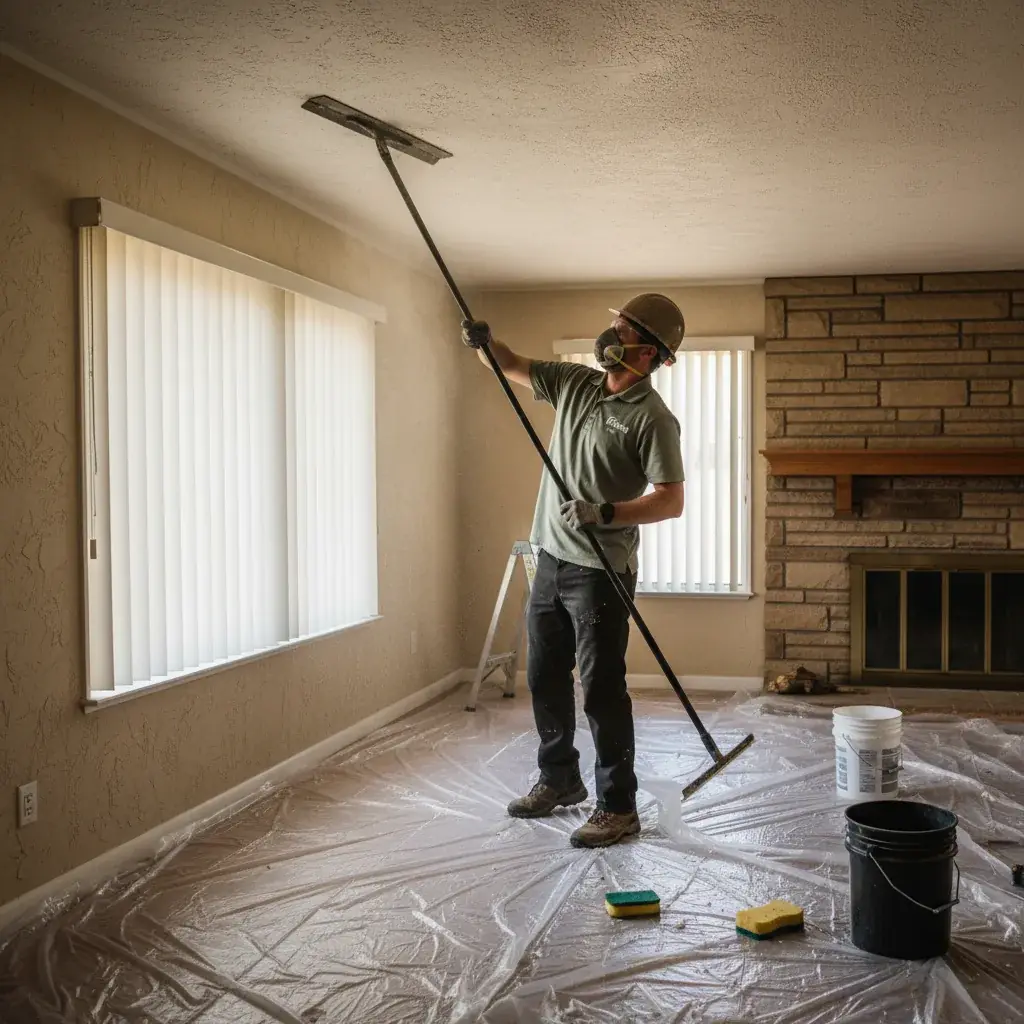
You pull back the listing photos and spot it immediately: that lumpy, spray-applied texture covering every ceiling in the house. If the home was built before 1980, there’s a real chance that texture contains asbestos, and even if it doesn’t, getting rid of it isn’t as simple as renting a scraper for a weekend.
A handyman can scrape and skim a popcorn ceiling that has tested negative. A positive asbestos test is licensed abatement, not a punch-list visit. Test first. Do not wet-scrape a pre-1980 ceiling until you have the result.
Why so many San Diego homes still have popcorn ceilings
San Diego went through an enormous building boom from the late 1950s through the mid-1970s. Mission Valley, Clairemont, Allied Gardens, El Cajon, neighborhoods that filled in fast with ranch homes and apartment buildings. Popcorn texture, also called acoustic texture or cottage cheese ceiling, was the standard finish on virtually every one of them.
It was cheap. It dried fast. It hid drywall seams and minor imperfections without extra labor. Builders loved it, and it spread across San Diego County the same way it spread across every Sun Belt city building at scale during that era.
The texture fell out of favor by the late 1980s. Flat and smooth ceilings took over, and the popcorn look started signaling “dated” rather than “finished.” Today, buyers routinely request removal before closing, and homeowners doing any kind of renovation, new paint, recessed lights, a fresh look in the living room, want it gone.
The catch is that removing it isn’t just a cosmetic project. If the home predates 1980, it’s also a health and regulatory question.
Asbestos testing: when it’s required and what it costs
Here’s the practical reality for older San Diego homes: texture applied before roughly 1979–1980 frequently contained chrysotile asbestos as a binder. It made the texture more durable and fire-resistant. The EPA phased it out, but existing ceilings weren’t stripped, they were painted over and ignored.
You can’t tell by looking whether asbestos is present. The only way to know is a lab test.
How the testing process works
A small sample, typically a quarter-sized piece of texture scraping, gets sent to an accredited laboratory. Labs analyze it for asbestos content and report back. Ask the lab for the current turnaround. If you have multiple rooms with different texture applications or different paint-over histories, you may need more than one sample.
Test first, every time, on any pre-1980 home. Disturbing asbestos-containing material without proper precautions is a genuine health risk. If a contractor is doing the work, confirm current Cal/OSHA and San Diego County air pollution control district obligations with that professional. Do not treat a homeowner scrape as automatically exempt from testing.
If the test comes back negative, you move forward with standard removal. If it comes back positive, you need licensed asbestos abatement, a separate contractor, separate cost, and separate disposal process before anyone picks up a drywall knife.
Scrape, skim, retexture, the three steps people underestimate
Most homeowners think of popcorn removal as one step: scrape it off. It’s actually three, and the second and third steps are where budget surprises happen.
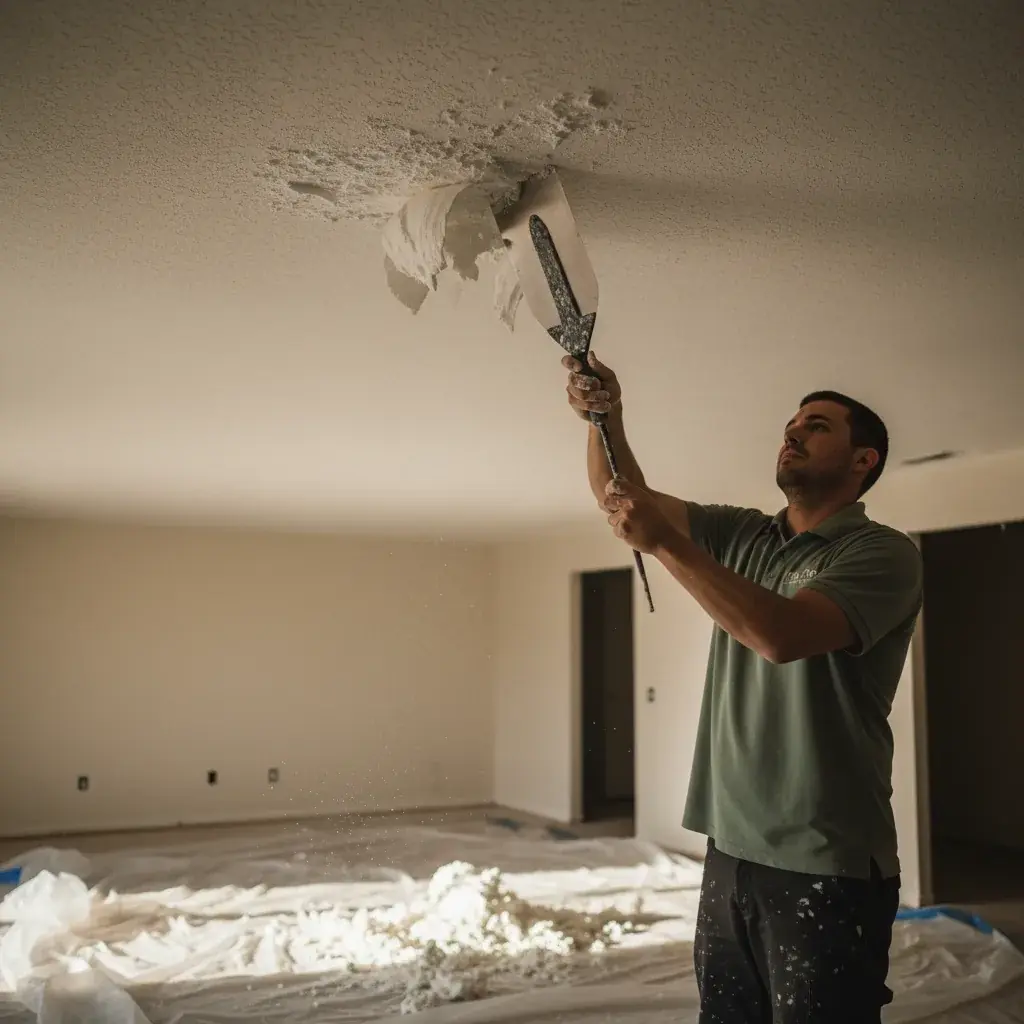
Step one: the scrape
You wet the texture with a pump sprayer, let it absorb for about 15 minutes, then scrape with a wide drywall knife. Wet texture comes off in sheets. Dry texture gouges the drywall paper underneath, which creates a mess that’s expensive to fix. Most of the floor gets covered in plastic sheeting, the debris is wet and heavy. It’s messy, physical work.
One important variable: if the ceiling was painted after the texture was applied, the paint acts as a moisture barrier. Wetting doesn’t penetrate well. That significantly slows scraping and sometimes forces a dry-scrape approach that’s harder on the drywall surface.
Step two: skim coat
This is the step DIYers most often skip, and regret. Once the texture is gone, the raw drywall surface is uneven, showing tool marks, raised seams, and areas where the paper tore slightly. A skim coat is a thin layer of joint compound spread across the entire ceiling to create a flat, consistent surface. Without it, any paint sheen will reveal every flaw.
Skim coating a ceiling takes skill. It’s harder than skim coating a wall because you’re working overhead, and the compound has to be applied and feathered before it starts setting. This is the step that separates a professional result from a ceiling that looks worse than the popcorn did.
Step three: prime and paint
Once the skim coat dries and is sanded smooth, the ceiling needs a high-hide primer before paint. This is especially true if the original drywall paper got wet during scraping, without primer, the paint will raise the paper fibers and create a fuzzy, uneven finish called “flashing.” After that, one or two coats of ceiling paint, and the job is done.
Those three steps together are why this project ties so naturally into drywall repair and interior painting, you’re often doing all three in the same room anyway.
What changes a popcorn-removal quote in 2026 San Diego
For a standard removal on a post-1979 home, no asbestos, no painted-over texture, drywall in reasonable condition, ask the quoting professional to price scrape and skim by the square foot or as a room ticket. A bedroom ceiling is a different ticket from a whole-house job.
Painted-over texture adds time. If the drywall underneath has significant damage, you’re looking at additional drywall repair on top of the removal price.
Asbestos abatement is a separate line item entirely. A licensed abatement contractor quotes remediation and disposal separately. That work is on top of, not instead of, the skim and paint work that follows. Fix Pro San Diego does not publish a per-square-foot menu.
A few things that affect final price in San Diego specifically:
- Ceiling height, standard 8-foot ceilings are the base; vaulted or 9-foot ceilings add time
- Obstacles, ceiling fans, recessed lights, and beams slow the work considerably
- Room access, apartments with narrow stairwells or limited staging space cost more to work in
Living in the house during the project
In most cases, yes, you can stay in the house. But it’s not comfortable, and a few rooms will be completely off-limits during work.
The plastic sheeting, fans, and wet debris make rooms unusable while they’re being worked on. Dust from sanding the skim coat spreads through HVAC systems if vents aren’t sealed, so closing off returns is standard practice. If you have pets or kids, keeping them out of work areas is important both for their safety and to avoid tracking debris.
Ask the quoting professional how they stage a single-story San Diego home. Most households manage by working room by room, keeping one bedroom and the kitchen accessible throughout. Fix Pro does not publish a brand duration.
If asbestos abatement is involved, the affected rooms need to be vacated during that phase. Abatement contractors will seal the space with negative air pressure equipment, and residents stay out until air clearance testing confirms the area is safe.
When a handyman handles it vs when you need a specialist
For post-1980 homes with no asbestos, or homes where testing confirmed the texture is clean, this is work a skilled handyman handles well. The scrape, skim, and paint sequence is exactly the kind of multi-trade job that ends up in one estimate and one visit rather than coordinating three separate contractors.
Asbestos abatement is different. That work requires a specific California contractor certification, and it’s not something to route through a general handyman. If your test comes back positive, get a dedicated abatement quote, have that work done and cleared, and then bring in your handyman for the finish work that follows.
If you’re unsure what you’re dealing with, old home, unknown texture history, ceiling that’s been painted multiple times, that’s also a reason to have someone take a look before you start pulling up a ladder. A quick site visit can tell you what you’re working with before a single drop of water hits the ceiling.
When a matched pro should inspect
If your San Diego home has popcorn ceilings you’re ready to be done with, start with testing when the home’s vintage warrants it. Independent professionals quote scrape, skim, and paint after that result is known. They should say plainly when asbestos work belongs to a licensed abatement contractor. Call (858) 400-4611. Fix Pro San Diego matches homeowners with independent local professionals.
Would you rather hand this one to a pro than do it yourself? Call (858) 400-4611.
Request a quote