Smart thermostats like Nest, Ecobee, and Honeywell Home T6 Pro still depend on the existing wiring. The usual wildcard is the C-wire, which a lot of 1970s-to-1990s San Diego tract homes are missing.
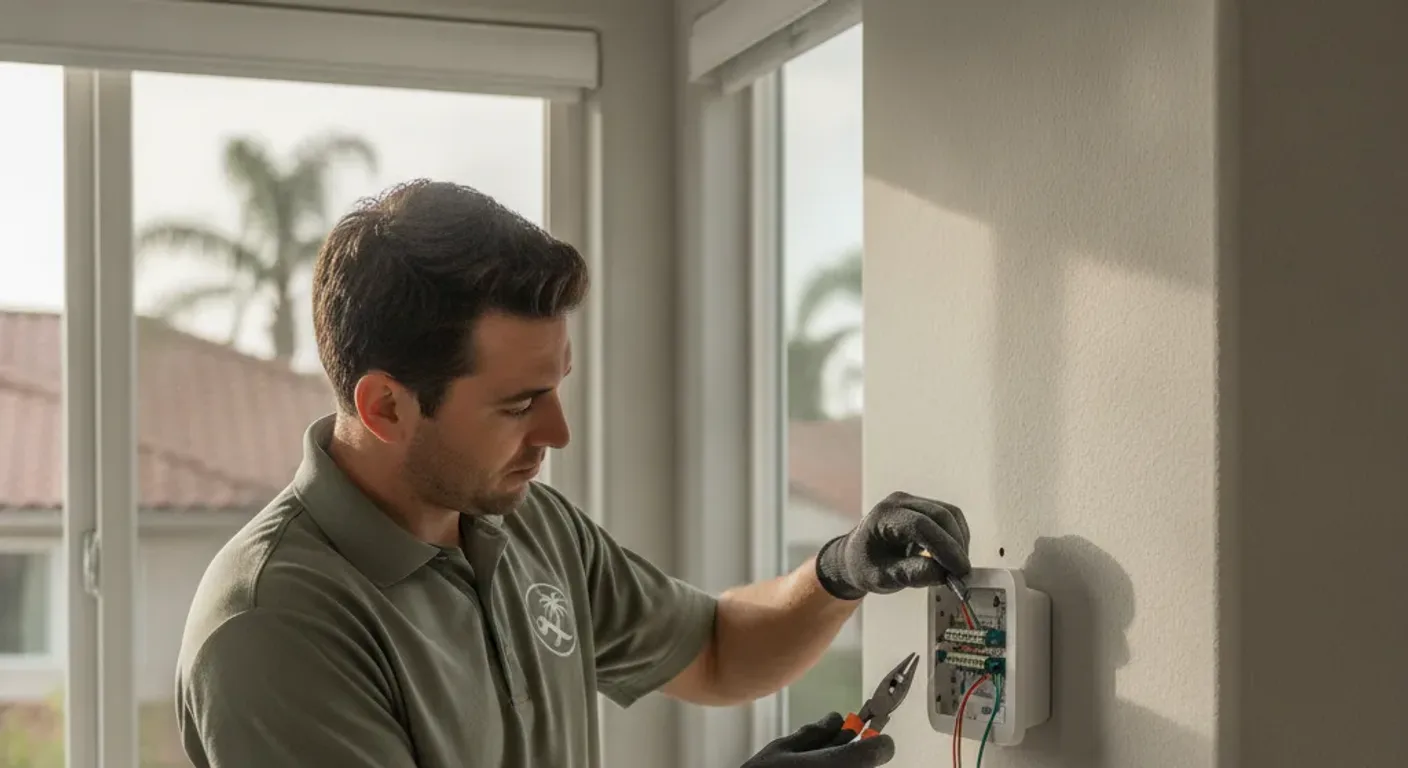
What a thermostat replacement actually involves
A standard thermostat swap is low-voltage work. The wiring runs at 24 volts, not the 120 or 240 volts you’d find at a light switch or outlet. Turn off the system and follow the thermostat and HVAC manufacturers’ instructions; use a qualified HVAC or electrical professional when compatibility or wiring is uncertain.
The job breaks down like this:
- Take a photo of the existing wiring before touching anything.
- Label each wire with tape so the terminals are clear (R, G, Y, W, C, and sometimes B, O, or E for heat pumps).
- Remove the old unit, transfer the labeled wires to the matching terminals on the new thermostat, and snap it to the backplate.
- Power the system back on and test heating and cooling modes.
Trickier wiring or a missing C-wire adds time.
Thermostat type, hardware cost, and installed cost
Pricing depends on the product, access, mounting surface, existing connections, and any work the professional excludes from the quoted scope. Ask for a written quote after the pro reviews photos and product details. The hardware is usually quoted separately from labor.
The C-wire problem in older San Diego homes
This is the question that trips up most smart thermostat installs in the county.
Smart thermostats need a constant 24-volt power supply, which comes through the C-wire (common wire). Older homes wired during the 1970s, 1980s, and early 1990s often only have four wires run to the thermostat: R (power), G (fan), Y (cooling), and W (heat). The C-wire was skipped because simple thermostats didn’t need it.
You have three options when C is missing:
Option 1: Use a C-wire adapter. Nest and Honeywell both make adapters that install at the air handler and create a virtual C signal using existing wires. Ecobee ships a “Power Extender Kit” that does the same.
Option 2: Pull an existing unused wire. Many HVAC installers ran a 5-wire bundle even if they only connected four. Open the thermostat base and look. A spare wire coiled up or taped back is all you need. Connect it at both the thermostat and the air handler, label it C, and you’re set.
Option 3: Run a new wire. If the bundle truly only has four wires with no spare, a handyman can fish a new thermostat wire from the air handler to the thermostat location.
Checking for a spare conductor requires confirming both ends of the cable and the equipment wiring. Do not energize an unverified conductor.
Smart thermostat setup: Nest, Ecobee, and Honeywell Home
The physical swap is the same regardless of brand. Where they differ is in the app setup and configuration that follows.
Nest (Google Home): Walks you through wiring via the Nest app before you ever touch the old thermostat. The app asks which wires you have and generates a custom wiring diagram. Setup is guided and forgiving.
Ecobee: Ships with the Power Extender Kit, which reduces C-wire anxiety. The app setup is straightforward. Ecobee also supports room sensors, which is worth thinking about in a larger San Diego home where the thermostat is in a hallway and the living room runs warmer.
Honeywell Home (T6 Pro, T9, T10): Strong compatibility with older systems and simpler setup flow. A good pick for homes with older HVAC equipment where a more basic smart thermostat is a better fit than a learning model.
The installer should first confirm the HVAC equipment, thermostat model, terminal labels, and power requirements. App and account setup can remain with the homeowner, but wiring compatibility belongs in the professional’s written scope.
When you need an HVAC professional, not a handyman
Most San Diego homes use a standard forced-air system with a gas furnace or split-system air conditioner. That’s straightforward low-voltage territory.
A few situations call for an HVAC professional instead:
Line-voltage systems. Electric baseboard heaters, in-wall heaters, and some older radiant systems run at 120 or 240 volts. The thermostats for these systems are line-voltage devices, not low-voltage. This is electrical work that requires a licensed electrician or HVAC tech, not a handyman swap.
Heat pumps with non-standard wiring. Heat pumps often use an O/B wire (reversing valve) and sometimes an E wire (emergency heat). A like-for-like replacement on a heat pump is still manageable, but if the wiring doesn’t match the new thermostat’s terminals or if the system behavior changes after the swap, you need an HVAC professional to trace the issue.
System faults masked by a failing thermostat. A new thermostat won’t fix a refrigerant leak, a bad capacitor, or a failing blower motor. If your system is running but not cooling or heating efficiently, get an HVAC diagnostic before assuming the thermostat is the problem. Swapping the thermostat and still having the same issue means the diagnosis was wrong.
Zoned systems. Multi-zone systems with a zone controller board are more involved. The zone board and thermostat wiring interact in ways that need the right configuration. A handyman can do a straight replacement on one zone if the wiring is identical, but any troubleshooting of zone behavior is HVAC scope.
For standard single-zone forced-air systems, which covers the majority of San Diego County housing stock built between 1960 and 2010, a thermostat swap is a clean handyman job. When in doubt, describing your system to the handyman before booking lets them confirm the scope.
Frequently asked questions
How much does thermostat installation cost in San Diego?
A basic replacement on existing wiring lands at the lower end. A smart thermostat install that requires a C-wire adapter or a short wire run lands in the middle. The hardware cost of the thermostat itself is on top of labor unless the handyman supplies it.
Can a handyman install a Nest or Ecobee in San Diego?
Compatibility depends on the thermostat and HVAC equipment, not the brand name alone. Have a qualified professional confirm the wiring and voltage before installation.
What is a C-wire and do I need one?
The C-wire (common wire) gives smart thermostats a continuous 24-volt power supply. Basic thermostats don’t need it. Smart thermostats almost always do. Many San Diego homes built before the late 1990s were wired without one.
How long does thermostat replacement take?
A missing common wire can require a manufacturer-approved adapter, an unused conductor confirmed at both ends, or a new cable. The route and equipment determine the scope.
Should I replace my thermostat before calling an HVAC tech?
Only if the thermostat is clearly the problem: blank display, unresponsive buttons, or a blank screen after checking batteries and breakers. If your system runs but doesn’t cool or heat properly, get an HVAC diagnostic first. A new thermostat won’t fix a refrigerant or mechanical issue and you’ll have spent money without solving anything.
What thermostat works with older San Diego homes?
Use the thermostat manufacturer’s compatibility checker for the exact HVAC equipment and wiring. A product family alone does not establish compatibility.
Ready to swap your thermostat?
A thermostat replacement is one of the faster home improvement jobs there is, and upgrading to a smart model can trim your HVAC runtime once schedules are configured. If the system is not clearly low-voltage, if the C-wire situation is unclear, or if you want a licensed independent pro to do the swap, call Fix Pro San Diego. Fix Pro matches the request. The independent pro quotes and completes the work.
Check our home maintenance checklist for San Diego for other seasonal tasks that pair well with a thermostat upgrade. For related electrical fixture work, see our light fixture installation and general repairs service pages.
Call us at (858) 400-4611 and we’ll match you with a pro who can quote the job.
Would you rather hand this one to a pro than do it yourself? Call (858) 400-4611.
Request a quote