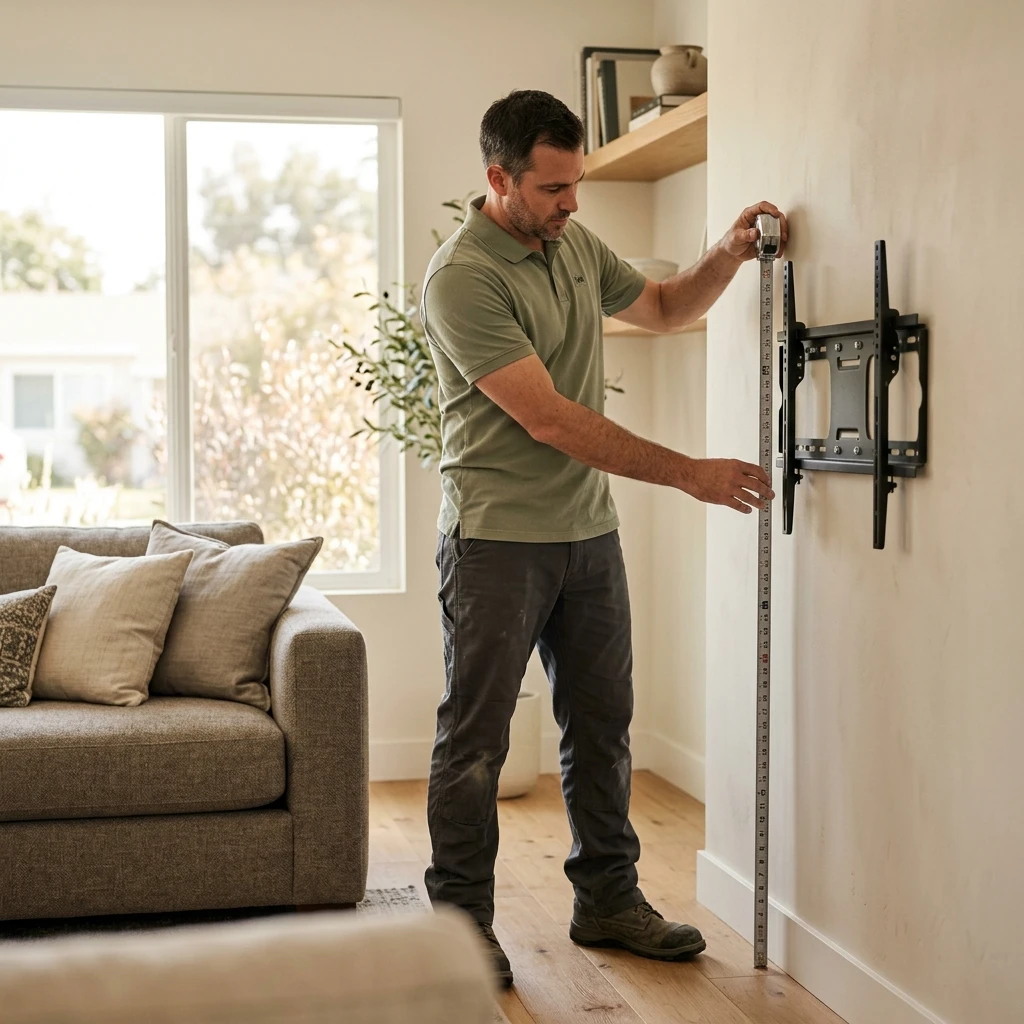
Start with the primary viewer seated normally and mark that eye line on the wall. Use the television and mount manufacturers’ instructions, then tape the full screen outline before drilling.
That’s the short version. Screen size, seating, and the room all change the result. Stucco, tile, and fireplace chases, common on San Diego walls, do not change the height method. They change the anchors and the time.
How to pick a mounting height
Measure from the floor to the center of the screen, not the top of the TV or the top of the mounting bracket.
Screen size alone does not determine mounting height. Seating height, viewing posture, distance, mount movement, furniture, and manufacturer guidance all affect the position.
Start from the viewer’s eye line
Aim for a comfortable view from the seat used most often, then check secondary seats. Record the measured eye line rather than applying one generic floor-to-screen number.
Two things push that number around:
- Sofa height. A lower sofa drops eye level, so the TV can mount a couple inches lower. A taller sofa or a room with recliners pushes it up.
- Viewing distance. The farther back you sit, the more forgiving the height becomes, since a few inches of vertical offset matters less at 12 feet than it does at 6.
Adjusting for the room
Bedroom, facing the bed. Mark the viewer’s eye line in the posture actually used in bed. Bed, pillow, and headboard dimensions can change the result.
Kitchen or bar area. Counter stools sit higher than sofa seats, and sightlines often cross a counter or island. Kitchen TV height runs case by case more than any other room. An independent pro should check the actual sightline on site rather than applying a living-room eye line.
Above a fireplace. Fireplaces force the TV higher than seated eye level, which is the main reason a tilting or full-motion mount matters there. It’s a comfort trade, not a mistake, if the fireplace is the only realistic wall.
Covered patio or outdoor room. Outdoor seating varies more than indoor furniture, so measure your actual chair height on site instead of copying an indoor living-room mark.
The most common mistake: mounting too high
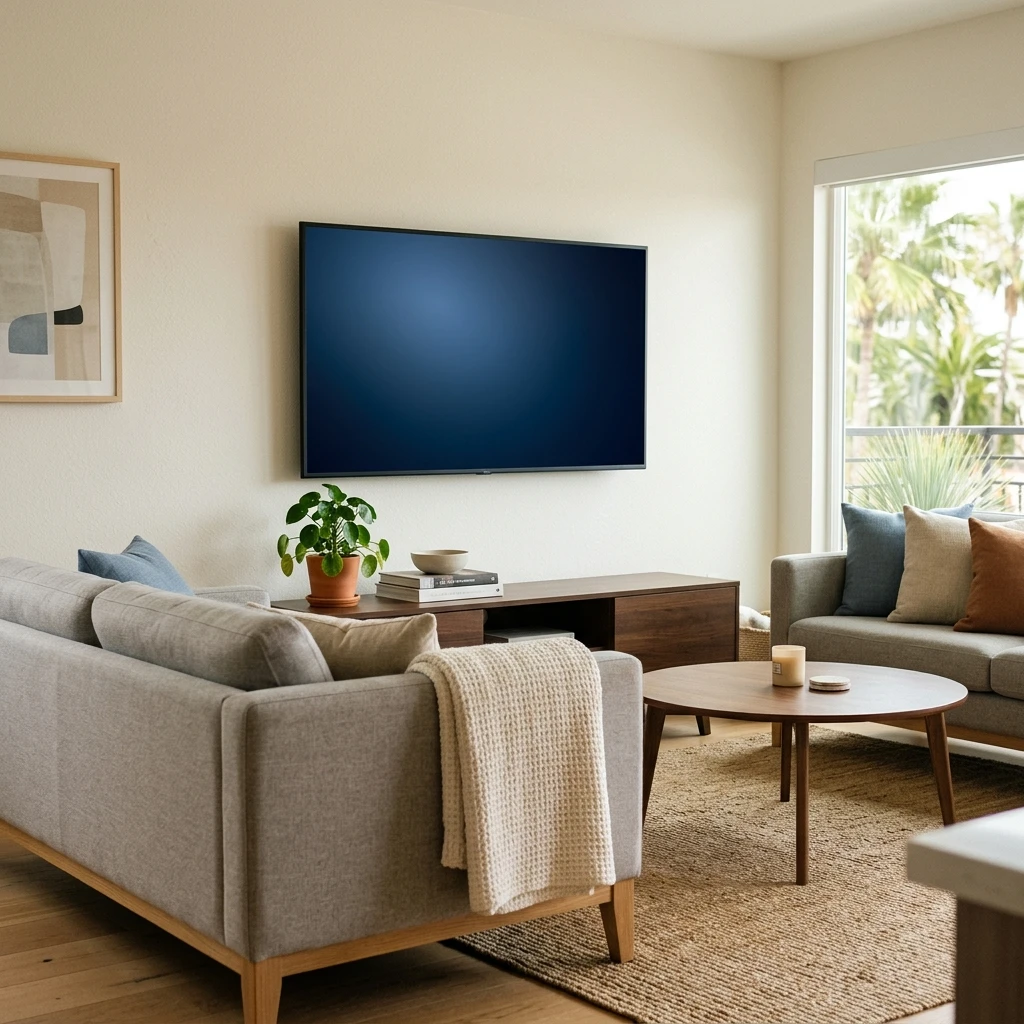
The “hotel room” look, TV pushed up near the ceiling, is a common height mistake in San Diego homes. It happens for a couple of reasons: people leave room for a cable box or soundbar underneath, or they’re matching the height of a piece of furniture instead of eye level. Either way, it forces you to tilt your head back for every movie night.
If cable management is the reason, raising the TV is the wrong move. Ask the professional whether surface raceway, existing openings, or a separate electrical quote can keep the screen at eye line. Confirm any in-wall power or low-voltage plan with the current authority and a qualified, licensed electrician before cutting the wall.
Finding the right stud height before you commit
Getting the height right on paper doesn’t help if the studs aren’t where you need them. In older San Diego homes with stucco or lath-and-plaster walls, stud spacing is less predictable than in newer construction, and the measured eye-line mark sometimes lands between studs instead of on one. Follow the television and mount manufacturers’ listed support method. Do not rely on drywall anchors if the manufacturer requires framing. When the measured height does not hit a stud, adding a short horizontal blocking board between two studs can give the mount backing at the height you want, instead of forcing a compromise on height to hit an existing stud.
If a previous mount is coming down and leaving holes at the wrong height, ask whether drywall patch is included in the written remount scope. Do not treat patching as automatically included or as a same-visit guarantee.
Frequently asked questions
How high should I mount a 55-inch TV?
For a 55-inch television, use its actual outer dimensions and the primary viewer’s measured eye line; diagonal size does not set one universal center height.
Is it better to mount a TV too high or too low?
Too low is more forgiving. A TV mounted a couple inches below eye level is a minor annoyance; one mounted too high forces you to tilt your head back for every viewing session.
Should bedroom TV height be different from living room height?
Yes. Measure eye level from the actual viewing posture in bed and tape the screen outline before choosing a mounting point.
Does TV mounting height change with a tilting mount?
A little. A tilting mount lets you angle the screen down, which is why TVs above a fireplace, mounted higher than ideal, still work: the tilt brings the picture back toward your eye line even though the physical height is wrong on paper.
How do I measure for TV mounting height myself?
Sit in your normal spot, have someone hold a tape measure at eye level against the wall, and mark that height. That’s your target for the center of the screen, adjusted a couple inches up for a larger screen or down for a smaller one.
Can a handyman remount a TV that’s at the wrong height?
A remount is a separate quoted scope. Ask whether the existing bracket can be reused, whether old holes get patched, and whether framing or blocking is available at the new height. Do not assume it is one visit.
Ready for a quote
Getting the height right the first time saves a second hole in the wall later. Call (858) 400-4611 or request a quote and get matched with a pro who can measure against your actual seating before drilling. For pricing across wall types, see the TV mounting cost guide.
Would you rather hand this one to a pro than do it yourself? Call (858) 400-4611.
Request a quote