Caulk is one of the least glamorous maintenance tasks in a home, but it’s one of the most consequential. Failed caulk around a tub surround is how you get water behind the tile. Failed caulk at exterior window frames is how you get moisture in the wall cavity. In San Diego’s coastal environment, these failures happen faster than in drier inland climates.
Here’s where to caulk, what to use in each location, and how to know when the old caulk needs to come out.
Where every San Diego home should have intact caulk
Bathroom and shower:
- Tub-to-tile joint (the horizontal joint at the base of the tile, where the tile meets the tub lip)
- Shower floor-to-wall joint
- Any inside corner in a tile shower
- Where the tub deck meets the wall at the ends
Kitchen:
- Behind the sink where the countertop meets the backsplash
- Where the countertop meets the wall
Exterior:
- Around every window frame where it meets the siding, stucco, or trim
- Around door frames and thresholds
- Any exterior penetration — pipes, conduit, air vent openings, cable entries
- Where the base of the stucco meets a concrete foundation or walkway
- Where different exterior materials meet (stucco to wood trim, for example)
Interior:
- Baseboards where they meet the floor (optional, but prevents drafts and pest entry in older homes)
- Crown molding at ceiling joints if you’re painting
The three caulk types you actually need
100% silicone — the best choice for wet areas (tubs, showers, sinks). True silicone doesn’t absorb mold, doesn’t yellow as fast as latex-silicone blends, and stays flexible as the house moves. The downsides: it can’t be painted, it requires real effort to remove, and it has a strong smell during application. Allow 24 hours cure before exposing to water.
Paintable acrylic latex (painter’s caulk) — the right choice for interior trim, baseboard, crown molding, and anywhere you need to paint over the joint. Cleans up with water. Dries in 30–60 minutes. Not suitable for wet areas — it will absorb moisture and fail within a year if used in a shower.
Polyurethane or hybrid sealant — the best choice for exterior applications in San Diego. It stays flexible through temperature and humidity swings, bonds well to stucco and concrete, and withstands UV better than standard acrylic. More expensive than acrylic, but it lasts 15–20 years on exterior applications vs. 3–7 for standard acrylic.
Tip: The label on a caulk tube will tell you exactly where it’s appropriate — look for “kitchen and bath,” “exterior,” or “paintable” on the front. The wrong caulk in the wrong location will fail in months, regardless of how carefully it was applied.

How to know when to replace caulk
Caulk needs to come out and be replaced — not just covered with a new layer — when:
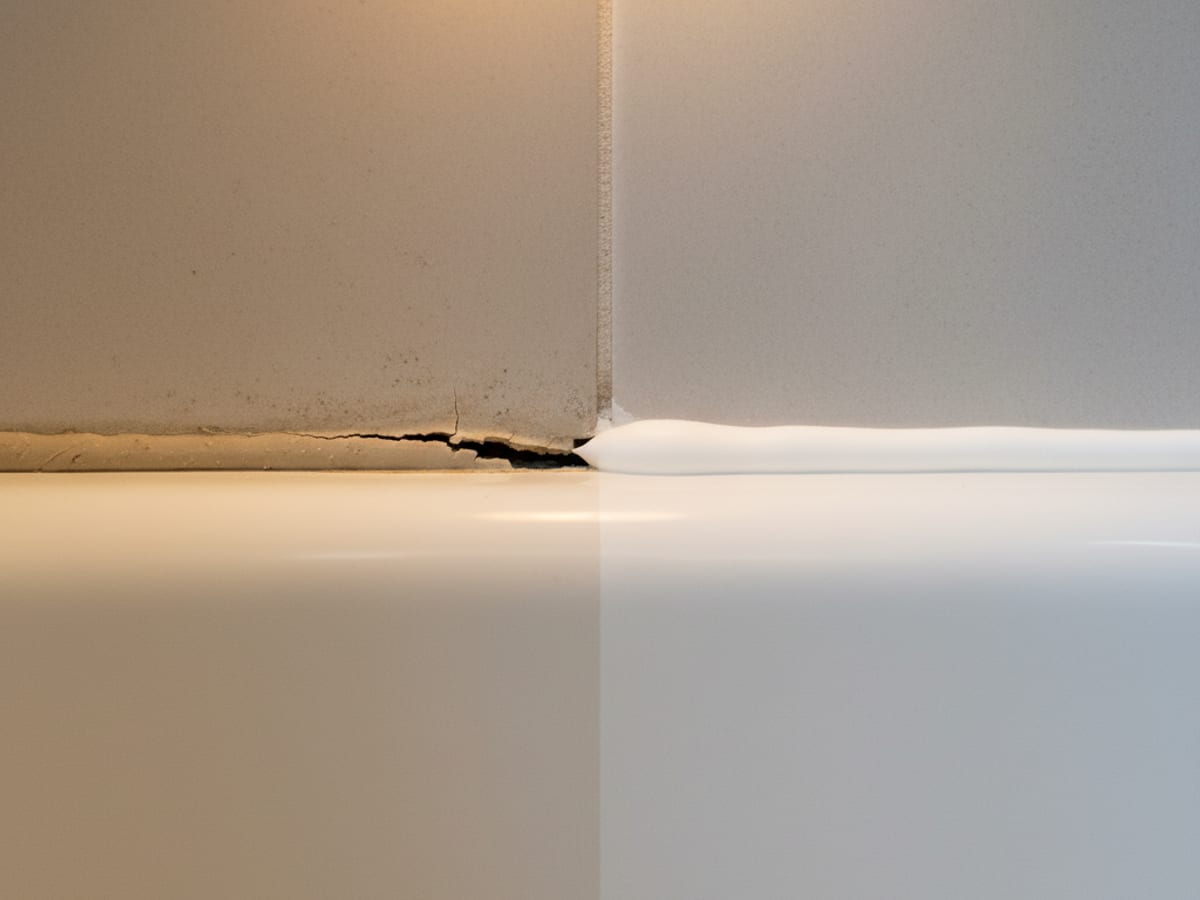
- It’s cracked or split along the length of the bead
- It has pulled away from one or both surfaces it was bonded to (you can see daylight or a gap)
- It’s turned brown or black from mold that’s grown into the surface (some superficial mold on silicone can be cleaned, but mold that’s embedded in the caulk body means the caulk is done)
- It’s peeling or flaking rather than staying continuous
Applying new caulk over failed caulk is one of the most common DIY mistakes. The new bead bonds to the old caulk, not to the tile or tub, and peels away just as fast as the original failure.
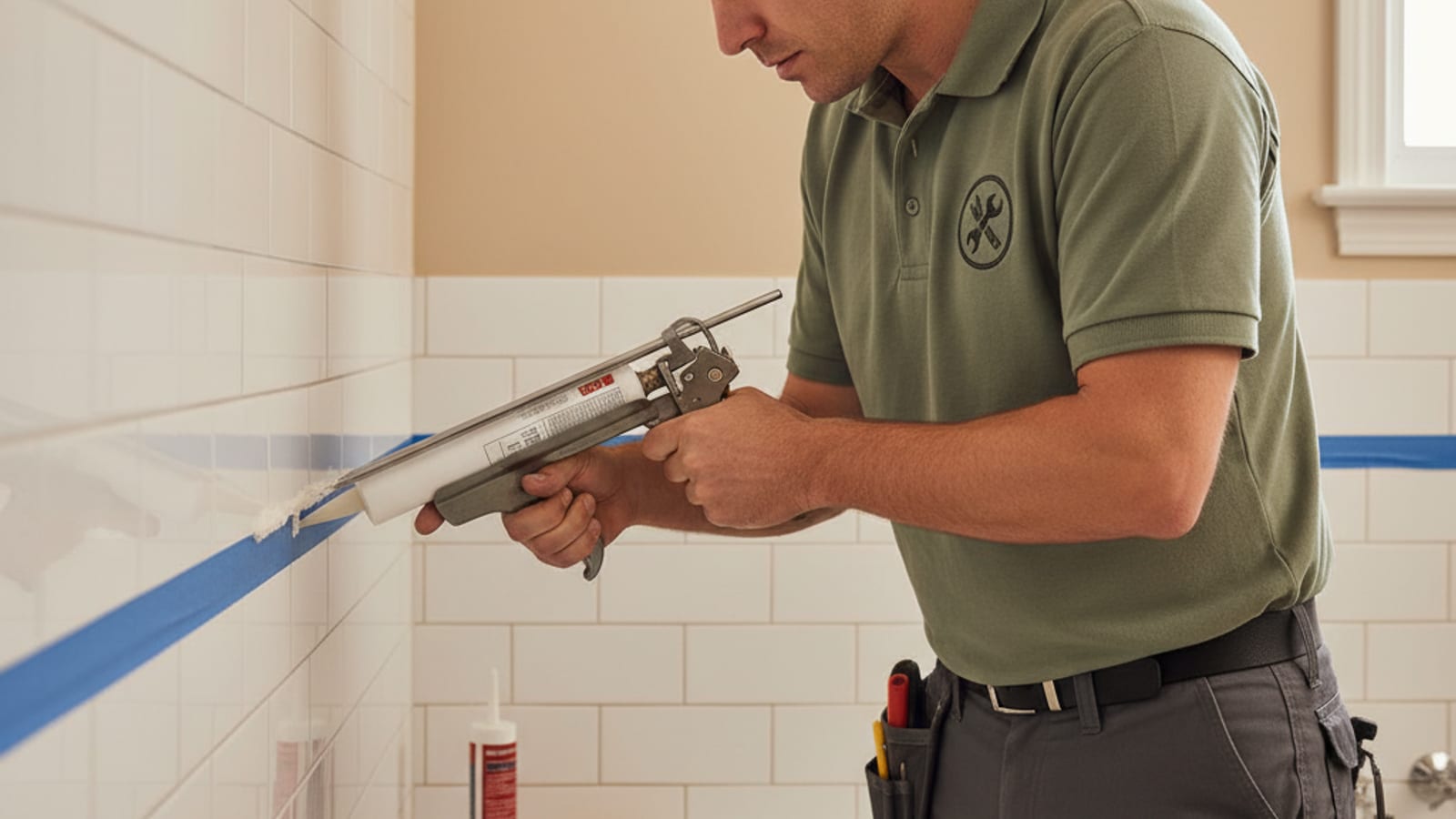
Proper removal takes time. A caulk remover tool (or a utility knife for tight spaces), patience, and a final wipe with acetone to remove silicone residue before the new bead goes on. For a tub surround with a full perimeter to strip and re-caulk, budget 45–90 minutes just for removal.
San Diego-specific: salt air and exterior caulk
Coastal communities in San Diego — La Jolla, Del Mar, Coronado, Pacific Beach, Oceanside, Carlsbad — get meaningfully more salt air exposure than inland cities. Salt accelerates the breakdown of exterior caulk, particularly standard acrylic latex.
Signs of accelerated salt air degradation:
- Chalking — the caulk surface turns powdery and rubs off
- Brittleness — the caulk cracks and chips rather than flexing
- Adhesion failure — the bead separates from the substrate cleanly (salt residue under the bond)
On coastal properties, re-examine all exterior caulk every two to three years rather than the typical five-to-seven-year cycle. Use a polyurethane or NP1-type sealant, not standard latex caulk, at exterior window and door frames.
On stucco homes, pay particular attention to the junction where stucco meets wood trim, window flanges, and any horizontal surfaces where water can pool. These joints see the highest moisture stress and fail fastest.
The prep step most people skip
Any new caulk job starts with a completely dry surface. Silicone won’t bond to a damp substrate — it will peel within weeks. In a bathroom, after removing old caulk, use a fan to dry the area for several hours and wipe down with a dry cloth before applying.
Exterior caulk application should happen on a dry day with low humidity. Don’t caulk exterior windows the day after a heavy rain or during the marine layer.
Fix Pro San Diego recaulks tubs, showers, and exterior windows as a standalone job or as part of a broader maintenance visit. Call (858) 400-8901 for a same-day quote.