Comparing tile repair companies starts with getting the same repair scope from each one. Written proposals should identify the damaged area, planned removal, replacement material, finish boundary, and any conditions that could change the work. Otherwise, you may be comparing different jobs without realizing it.
Define whether the request involves grout or tile
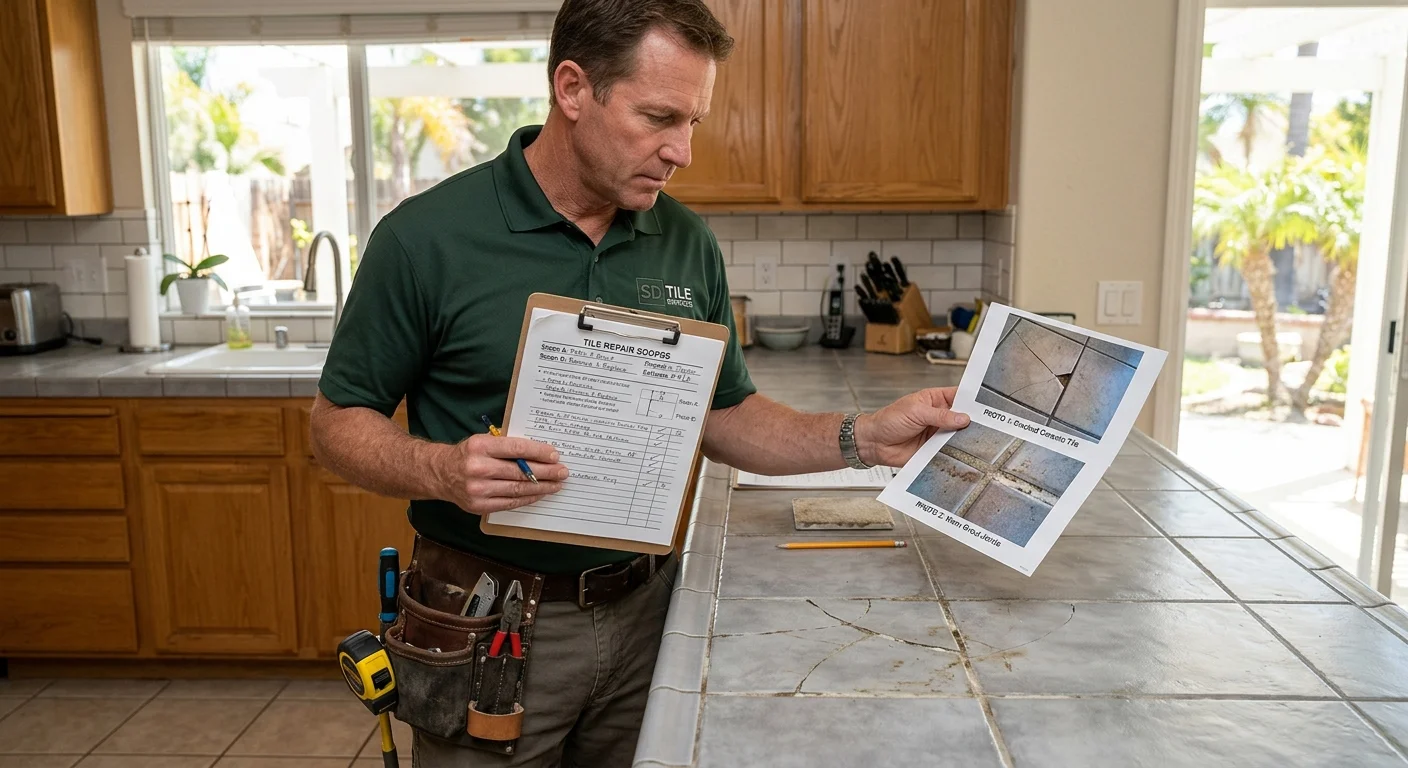
Start with a plain description of everything you can see. Note cracked tiles, loose pieces, missing grout, stained joints, damaged edges, and failed caulk. Don’t diagnose the cause. Your first goal is to give every company the same visible starting point.
Mark the affected locations on a photo. For a shower, label the wall, curb, floor, niche, or corner. For flooring, show where the damage sits relative to a doorway, cabinet, or wall. A wide photo supplies context. A close photo records the specific tile or joint.
Ask each company to separate tile work from grout work. The proposal should say whether it covers removing grout, replacing grout, removing tile, setting replacement tile, or finishing nearby joints. If caulk is involved, have that listed separately too.
This distinction matters when one company proposes grout work around the damaged area and another includes tile removal and replacement. Those descriptions shouldn’t be treated as equivalent scopes.
Ask how the company measured the area. A proposal could identify individual tiles, a defined section, or named grout lines. What matters is that the boundary is clear enough to compare with another proposal.
If your request is mainly about failing joints, the regrouting shower tile in San Diego guide explains the questions to organize before contacting a pro. You can also review the tile and grout repair service page to see how Fix Pro San Diego matches homeowners with independent local professionals.
Compare removal, matching, and finish boundaries
A strong comparison shows where each company’s work starts and stops. Ask every bidder to describe removal, preparation, replacement, grouting, caulking, cleanup, and disposal as separate parts of the scope.
For removal, request an exact boundary. The document should identify which tiles or grout lines will be removed. It should also explain how the company would handle another damaged or loose tile discovered beside that area. Don’t assume surrounding work is included unless it appears in writing.
Matching needs its own conversation. Photograph the existing tile in daylight and under the room’s normal lighting. If you have spare tile, photograph the box, label, and remaining pieces. Tell every company whether those pieces are available.
Ask each bidder to state who supplies the replacement tile. Have them describe the proposed match by size, shape, surface, color, and edge treatment. If an exact match can’t be confirmed before removal, ask how you’ll approve the alternative. Possible choices can be documented without promising that a match exists.
Finish boundaries also deserve detail. The proposal should define where new grout or caulk meets the existing finish. Ask whether the work includes only the repaired section or a larger visible plane. In a shower, that might mean one wall instead of the entire enclosure. On a floor, it could mean a small tile group rather than the full room.
If the damage is on a floor, read about the comparison points for tile floor crack repair in San Diego. Use those points to ask consistent questions, not to diagnose the floor from a photograph.
Finally, request a written list of exclusions. Common comparison categories include painting, trim removal, fixture removal, disposal, and work outside the marked area. An exclusion list prevents silence from being mistaken for included work.
Ask how loose tiles change the proposed scope
Loose tiles can make proposals difficult to compare because each bidder may describe a different stopping point. Ask the pro to identify which tiles are included based on the initial photos and site review. Then ask what happens if the visible boundary changes after removal begins.
The answer should appear in the written scope. Look for a clear process covering additional findings, homeowner approval, and a written change to the proposed work. Confirm current CSLB rules for how contract changes should be recorded.
Don’t accept an undefined phrase such as “repair as needed” as the entire boundary. Ask what “needed” covers. Does the starting scope include only the visibly loose tile? Does it include adjacent tiles identified during the site review? At what point would the pro pause and present a revised scope?
Use the same questions with every company:
- Which tiles are included now?
- How will included tiles be marked?
- What preparation is included beneath the removed finish?
- What finding would change the scope?
- How will added work be described and approved?
- Which materials would the homeowner need to approve?
Keep the answers beside each proposal. This makes it easier to see whether a lower or higher total reflects a narrower or broader repair. It also helps separate a defined repair from an open-ended allowance.
Companies may return proposals in different formats. The format matters less than the detail. Each document should let you identify the starting boundary, decision point, and approval process.
Separate visible repairs from the damage source
A proposal can describe the visible finish without addressing why the area changed. Ask each company to state whether its scope covers only the tile and grout or also includes evaluating the area behind or below them.
Don’t ask a company to promise what photographs can’t confirm. Instead, request two written boundaries. The first should cover conditions visible during the review. The second should explain what happens if removal reveals a condition outside the original scope.
For a shower, record any staining, recurring joint changes, movement, odor, or prior patching you’ve observed. For a floor, note nearby cracks, movement, past repairs, and whether the issue has changed. These are observations for the pro to consider, not a homeowner diagnosis.
The tile water-damage signs guide can help you organize visible observations. Ask the responding pro what they can evaluate, what falls outside their work, and whether another specialist should review a condition before the finish repair proceeds.
Permit assumptions should also be written down. Inside City of San Diego limits, confirm the current requirements with the City of San Diego Development Services Department. For properties outside city limits, ask the authority serving that address. Each proposal should identify whether permit work is included, excluded, or not yet confirmed.
Use consistent photos when comparing proposals
Send every company the same photo set. Changing the images between requests can change what each bidder believes is included. Create one folder and keep the original files available.
Begin with a wide photo of the room or surface. Add medium views showing the damaged area’s position. Finish with close photos of every crack, loose tile, grout gap, edge, and transition. Include a ruler or another consistent size reference when scale isn’t clear.
Number the photos and connect them to a short written list. For example, “Photo 1, shower wall near the curb” is clearer than “bad tile.” Don’t crop away nearby surfaces that may affect the proposed boundary.
The photographing home repairs before requesting quotes guide offers a repeatable photo process. Keep your description neutral. Record what you see and let each pro explain the proposed response.
When proposals arrive, build a simple comparison sheet with one row per company. Include:
- Tiles and grout lines covered
- Removal boundary
- Preparation included
- Replacement material source
- Match approval process
- Grout and caulk finish boundary
- Cleanup and disposal
- Exclusions
- Process for additional findings
- Permit assumptions
- Payment schedule
Confirm the individual contractor through the CSLB license check before hiring.
Fix Pro San Diego is a referral service. We don’t inspect tile, write the contractor’s scope, set prices, or perform repairs. The San Diego handyman matching page connects homeowners with licensed independent local pros. The homeowner contracts with and pays the selected professional directly.
For a cost-focused discussion, review the factors in the San Diego shower tile repair cost guide. Use the guide to identify scope questions. The professional should quote your specific work before starting.
Ready for a quote
Tile repair is worth handing to a pro when removal, matching, loose tiles, or an uncertain repair boundary makes the scope hard to define. Call (858) 400-4611 and we’ll match you with a local pro who quotes the job before starting.
Would you rather hand this one to a pro than do it yourself? Call (858) 400-4611.
Request a quote