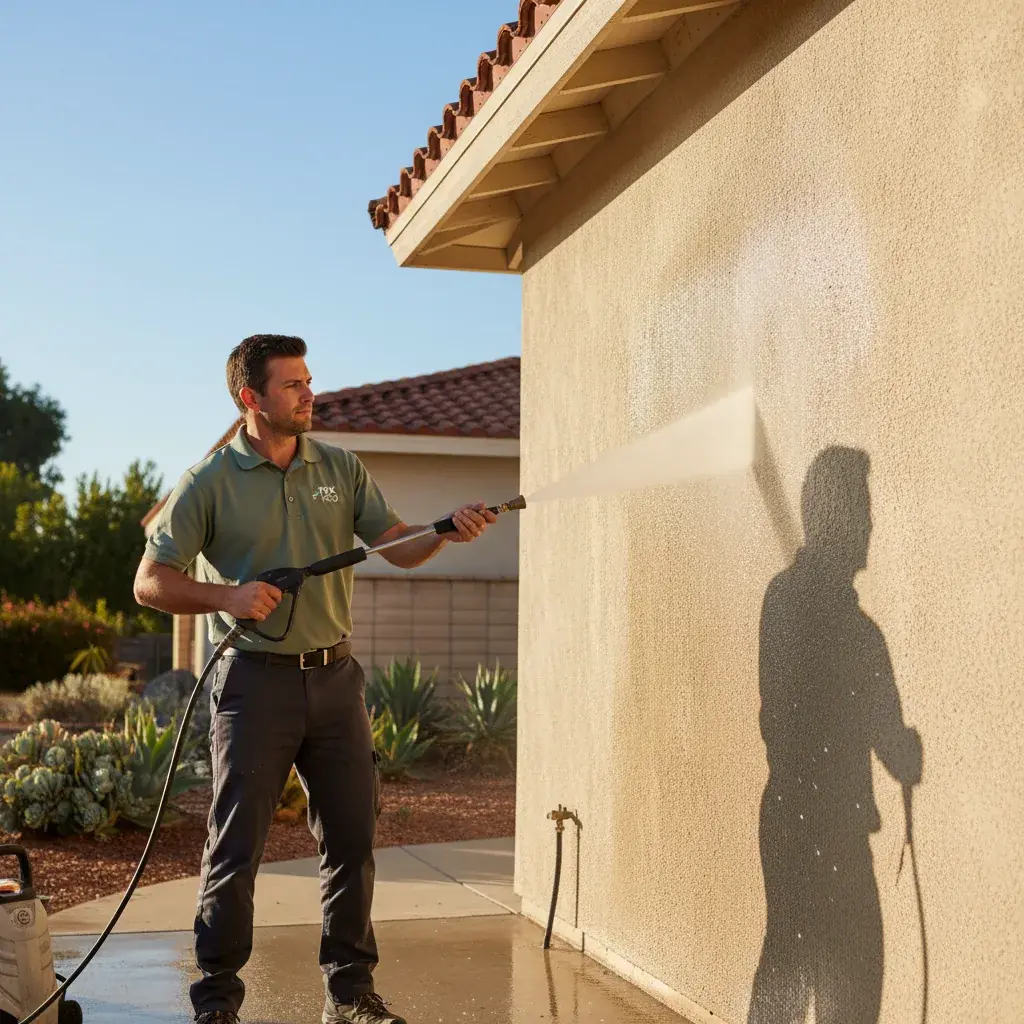
Surface condition and preparation affect coating adhesion and appearance. On San Diego stucco, start by identifying the existing finish, contamination, cracks, repairs, moisture concerns, and the exact coating system before work begins.
Why prep matters more than paint on stucco
Stucco must be clean, dry, sound, and prepared for the selected coating. Loose material, chalk, dirt, grease, mildew, and incompatible prior coatings can interfere with adhesion. Follow the selected coating manufacturer’s current surface-preparation and curing instructions rather than a generic San Diego schedule.
Weather at the property affects drying and application. Check the product’s allowed surface and air temperatures, humidity limits, rain window, and recoat time instead of applying a general coastal or inland schedule.
Hairline crack repair before primer
Stucco can crack for more than one reason. Width, pattern, location, change over time, nearby staining, and movement all belong in the inspection. A photograph alone cannot establish that a crack is cosmetic or identify its cause.
The repair approach depends on the existing stucco system and the selected repair and coating products. Follow the selected manufacturer’s specification for crack width, opening, cleaning, and patching. Refer changing or uncertain cracks for appropriate assessment.
A few rules that apply to all stucco crack repair:
- Let patches cure for the time and conditions stated by the selected product.
- Match the texture. A filled crack that’s flat in a skip-trowel finish will telegraph right through paint.
- Use a repair material specifically approved for the exterior substrate and compatible coating system.
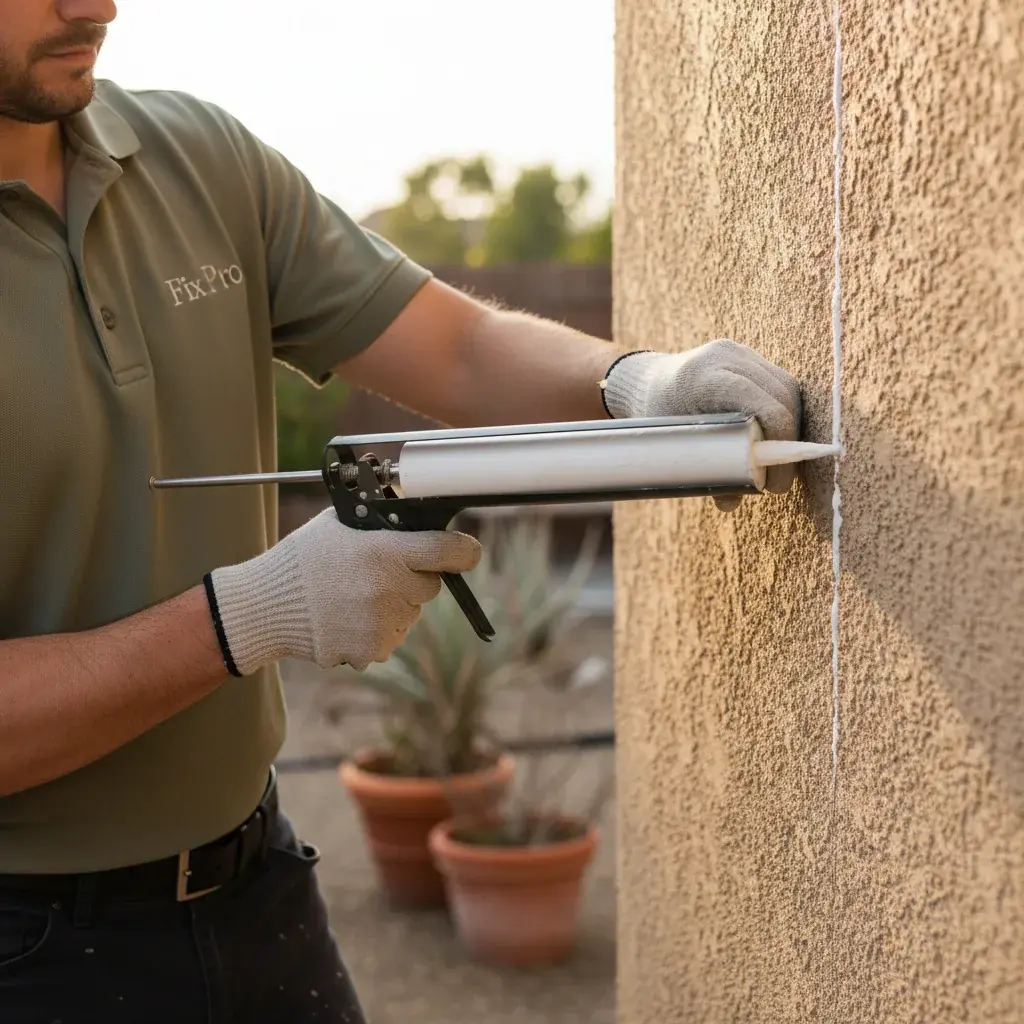
For joints at window perimeters, door frames, and where stucco meets wood trim, ask whether caulking and sealing belongs in the written prep quote. Homeowners often rush or skip this step, and it is a common place for water to enter.
Power washing vs hand scrubbing, when each one is right
Cleaning is necessary, but pressure washing is not automatically right for every stucco surface. Inspect for loose, cracked, hollow, or previously repaired areas and follow the coating manufacturer’s preparation method.
Pressure, tip, distance, and cleaning product depend on the machine, substrate, coating, and condition. Do not use an unsourced universal pressure setting. Test the chosen method in an inconspicuous area and use a qualified pro when the surface or access is uncertain.
Hand cleaning may suit a limited or delicate area. Use only a cleaner approved by the coating manufacturer for that surface, follow its safety label, protect adjacent materials, rinse as directed, and do not mix cleaning products.
After washing, let the surface dry for the period and conditions required by the selected system. Confirm dryness as directed rather than relying on a San Diego calendar rule.
The pressure washing guide for San Diego homes covers technique and equipment choices. If you want that work quoted separately, request a pressure washing match.
Coastal vs inland prep: what changes between Pacific Beach and Poway
The property exposure and weather during application matter more than a broad neighborhood label. Document shade, direct sun, wind, nearby irrigation, visible salt or chalk, and recent rain, then check those conditions against the selected product specification.
On coastal exposure, photograph visible residue, mildew, chalk, and failed joints. Ask the coating manufacturer or painter how the specified system addresses the observed condition. Do not assume that every white deposit is salt or that every coastal wall needs an elastomeric primer.
On hot or sun-exposed walls, measure the surface conditions during the planned work. Follow the selected product’s application-temperature range and avoid painting a surface outside that range. Shade, wind, and wall orientation can make the substrate differ from the reported air temperature.
Choose materials from the actual substrate, exposure, prior coating, and product compatibility rather than a coastal-versus-inland label alone.
Primer choices for elastomeric vs acrylic topcoats
Primer requirements depend on the substrate, its condition, and the selected topcoat. Read the current technical data sheets for the full system before purchasing materials.
Acrylic topcoats vary in substrate, primer, coverage, coat, and application requirements. Select a product explicitly approved for the existing masonry surface and follow that product’s primer instructions.
Elastomeric topcoats have product-specific film thickness, coverage, preparation, primer, and coat requirements. Read the selected product’s current specification for coat count, dry time, and recoat. Do not generalize one brand’s schedule to a different product.
Apply primer and topcoat only within the selected products’ stated temperature, moisture, and weather conditions. Those limits differ by product, and surface temperature can differ from air temperature.
When to call
If your stucco has cracks wider than 1/4 inch, multiple areas of hollow-sounding material, or damage at structural transitions like window headers and foundation lines, those repairs go beyond surface prep. The same applies if you’re dealing with a two-story home where pressure washing requires working from height, or if you’re not sure whether what you’re seeing is a cosmetic crack or water intrusion damage.
Fix Pro San Diego connects you with independent pros for crack patching, caulking and sealing, and pressure washing as standalone pre-paint requests. Call us at (858) 400-4611 and we’ll match you with a handyman across San Diego County.
Would you rather hand this one to a pro than do it yourself? Call (858) 400-4611.
Request a quote