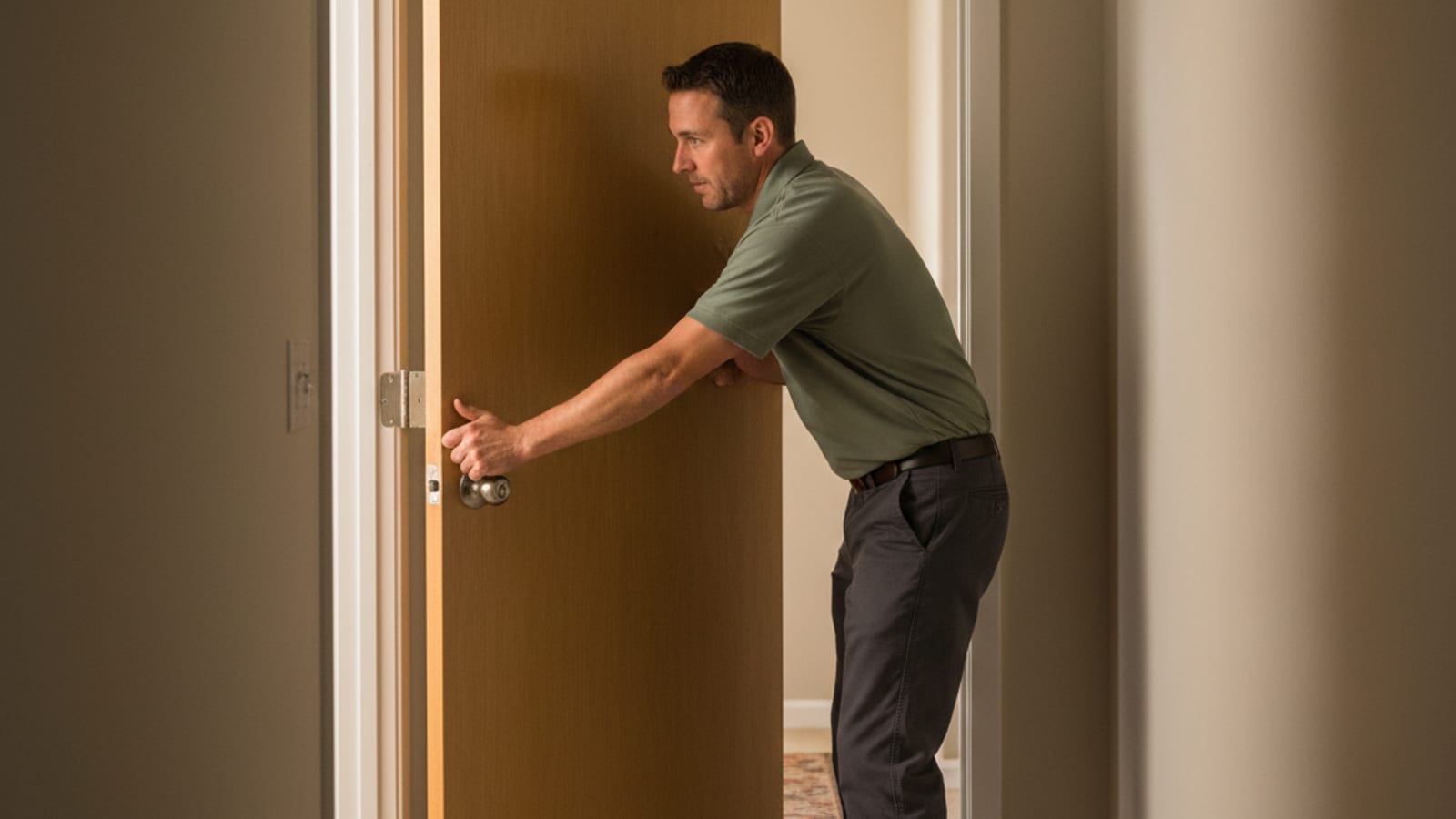
A sticking door fights the latch, the strike, or a sagging hinge. Edge scraping along the slab is door rubbing. Keep those requests separate so the matched pro quotes the right opening.
What “sticking” means on this page
Operate the door as you normally would. Note the first resistance. Common latch-side patterns:
- The leaf reaches the frame but the latch will not enter the strike without a lift or shove
- The door closes in dry weather and fights after a humid stretch
- The hinge side wiggles and the latch corner drops
Coastal marine layer can swell wood. Inland clay soils can move a slab over years. Those are real regional conditions. They are not a ranked frequency table for your house. Write what you see and when it started.
Paint stacked on hinge mortises can add thickness. That is a finish issue, not a soil issue. Record paint ridges at the stop if you can see them. Do not chisel them out before photos.
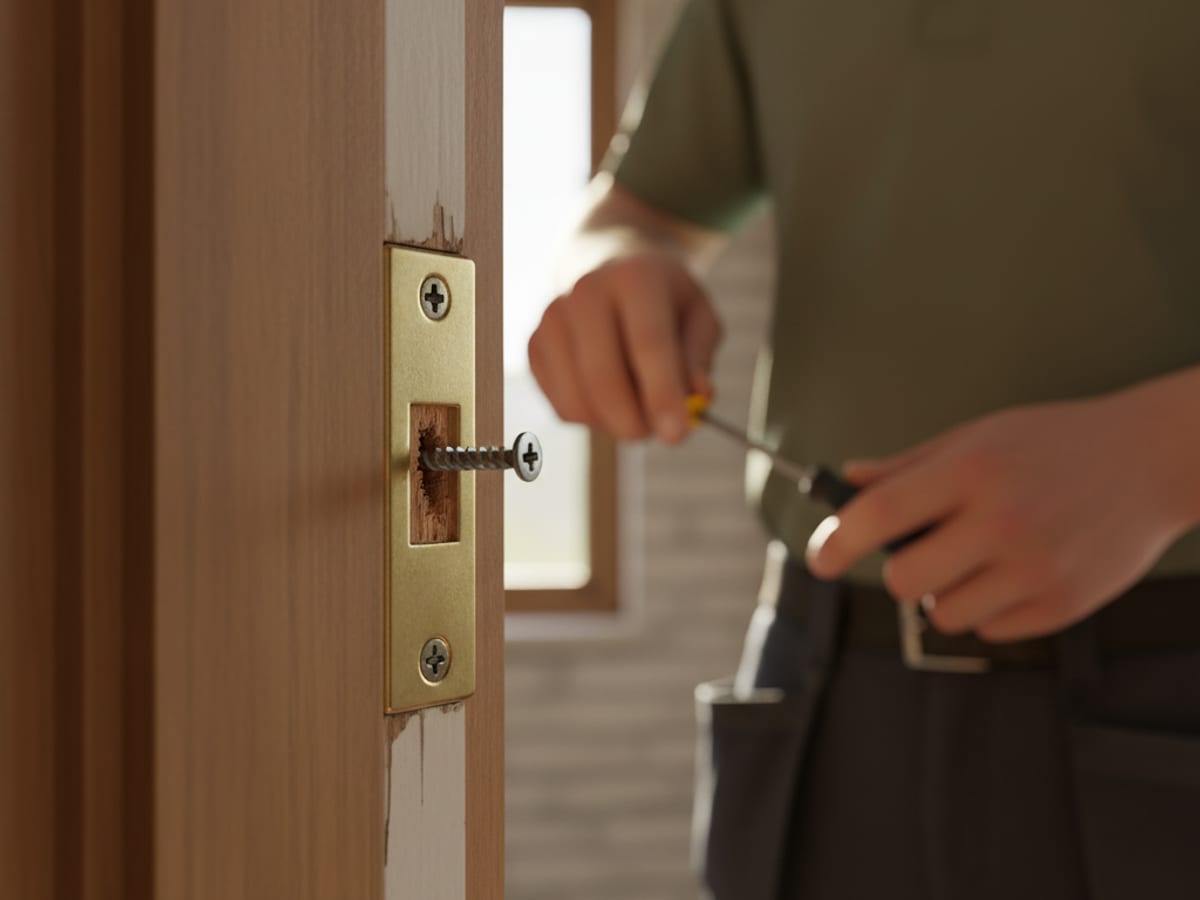
Hardware checks that do not require removing the door
Look at each hinge leaf with the door open. Missing screws, spinning screws, and a visible gap under a hinge plate belong in the photo set. Longer screws that reach a stud are a common carpenter method when the jamb is sound. They are not a guaranteed fix, and they can split a thin jamb if driven blindly.
There is no verified share of “40 percent of sticking doors” solved by hinges. Treat hinge play as one of several observations.
Do not plane more than a tiny high spot without a written plan. Removing more than a small amount of the latch edge can ruin the fit when humidity drops. If the frame is out of square, planing the slab hides the rack.
When the request is structural, not a latch tweak
Ask for an on-site review when you see:
- Diagonal drywall cracks at the upper corners of the opening
- Several doors sticking at once
- A visibly tapered gap from head to sill
- Soft wood, staining, or movement in the jamb
Fix Pro San Diego does not inspect, reset frames, or handle the carpentry. It matches you with licensed, independent local professionals. You contract with the pro directly.
Confirm current CSLB and local permit rules for the proposed contract. Check a contractor on the CSLB site before you hire.
A captured Taskrabbit San Diego door-repair listing said door repair prices begin at $50 per hour in San Diego. Use that only as a marketplace example. Get a written quote for this door.
How to write the request
Send a closed-door photo, an open-door hinge photo, and a short note: latch miss, hinge play, or seasonal change. City and access notes help routing. They are not an arrival promise.
Call (858) 400-4611 and we’ll match you with a local pro who quotes door repair before starting.
Would you rather hand this one to a pro than do it yourself? Call (858) 400-4611.
Request a quote