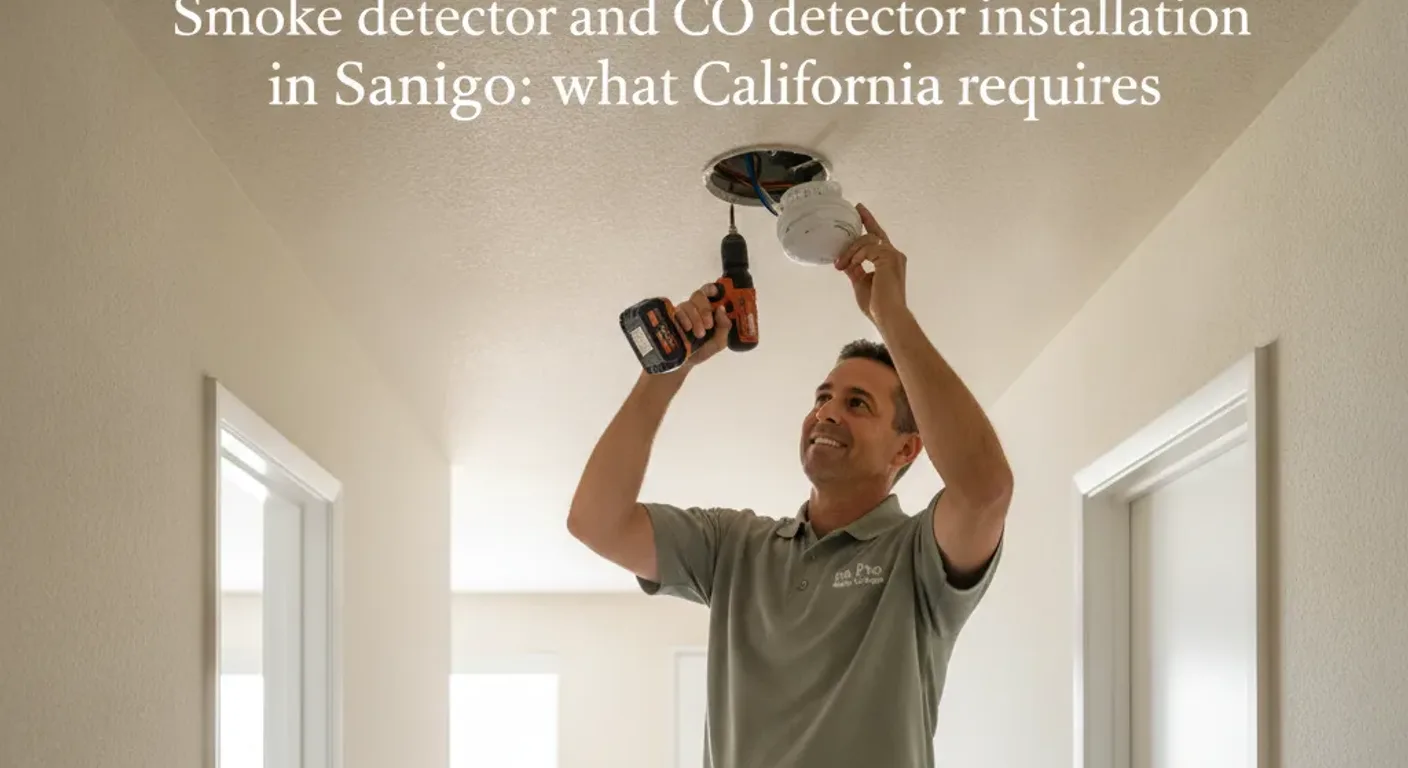
Detector requirements depend on the building, fuel-burning appliances, project type, and current California and local rules. Confirm the current requirements with the authority serving the property and follow the listed device manufacturer’s instructions.
California detector rules to confirm before booking
Carbon monoxide alarms. Confirm required locations from the current California rules and local authority for the property. Follow the listed alarm manufacturer’s placement instructions.
Smoke alarms. Use listed products and confirm required locations and interconnection rules for the building and project with the current authority.
Battery and replacement rules. Check the current California requirements and the alarm label. Do not infer compliance only from the battery format or age.
If you’re selling a San Diego home, confirm the current seller-disclosure or certification rules with the authority and the transaction professionals on that sale. Don’t copy a checklist from memory.
Where detectors go: placement that actually works
Placement matters more than buying a listed product and leaving it in the wrong spot.
Smoke alarms. Follow the listed alarm manufacturer’s placement instructions for ceiling versus wall mounting and keep them away from kitchens and bathrooms if the manufacturer warns about cooking steam or shower humidity. The goal is every bedroom, the hallway immediately outside bedrooms, and at least one detector per floor, unless the current authority requires a different layout.
CO detectors should be installed near sleeping areas so the alarm can wake occupants overnight. Follow the listed manufacturer’s mounting-height instructions. Keep CO detectors away from gas appliances and vehicle exhaust sources if the manufacturer warns those locations cause false alerts.
Combination smoke and CO units can cover both functions in one location when the listed product, placement, and configuration satisfy the current requirements. Confirm that with the current authority and the manufacturer’s instructions.
Pricing depends on the product, access, mounting surface, existing connections, and any work the professional excludes from the quoted scope. Ask for a written quote after the pro reviews photos and product details.
Hardwired vs battery: which is right for your home
Existing alarms may be battery powered, hardwired, or interconnected. Verify the actual system and use compatible listed replacements according to the manufacturer.
Replacing a hardwired alarm with a like-for-like unit, same number of wires, same connector, is a smaller scope than adding a new circuit. The wiring stays in place. Confirm compatibility and interconnection with the listed replacement.
Sealed-battery alarms are the right choice for locations that don’t have existing wiring, or in older San Diego homes where running new circuits would require significant wall work. Modern 10-year sealed units are reliable and genuinely convenient since you never deal with a chirping 3am low-battery warning again.
Where a typical replacement scope ends: adding hardwired interconnected alarms to a home that currently has none requires running new wiring and possibly a new circuit from the panel. That work belongs with a licensed electrician. Confirm current license and permit rules for the proposed contract. If you need new wiring throughout the home, get a licensed electrician for the circuit work, then have a separate quote for the physical mounting.
For related electrical work like light fixture installs, see the light fixture installation service page.
What changes a detector installation quote
The main cost drivers are the number of units, whether they’re battery or hardwired, and how accessible the locations are.
Provide the number, model, power type, mounting location, and photos of every existing alarm. Ask the professional to confirm product compatibility and quote the exact scope.
Hardwired replacements take longer per unit because each one involves confirming the wiring, testing the interconnect, and verifying all units trigger together. Ask the pro to quote time against the actual alarm count and access.
Interconnected sealed-battery alarms are a middle-ground option. These use wireless radio signals to communicate, so when one triggers, all do, without any wiring between units.
Detector replacement pairs well with the general home repair service page.
Frequently asked questions
How many smoke detectors does a California home need?
Required alarm counts and locations must be confirmed for the specific building under current state and local rules.
Are combination smoke and CO detectors acceptable under California law?
A listed combination unit may cover both functions only when its placement and configuration satisfy the current requirements and manufacturer instructions.
Can a handyman replace hardwired smoke detectors?
Hardwired alarm work is electrical work. ESFI strongly recommends hiring a qualified, licensed electrician to perform any electrical work in your home. Confirm compatibility and interconnection before replacing a unit.
What battery and replacement rules should I confirm?
Confirm current California and local alarm rules with the authority serving the property. Follow the listed alarm manufacturer’s battery, replace-by, and interconnection instructions. Do not infer the current rule from this page.
How do I know if my CO detector is up to date?
Use the manufacture, replace-by, or end-of-life information printed on the exact alarm and follow its manufacturer’s replacement guidance.
Does a handyman need a permit to install smoke or CO detectors in San Diego?
Permit requirements depend on the scope and jurisdiction. Ask the authority serving the property and use a qualified, licensed electrician for hardwired work.
Call Fix Pro San Diego at (858) 400-4611 and we’ll match you with a pro who can quote the job. We serve homeowners across San Diego County, and the pro you’re matched with confirms timing when they call. For outdoor electrical work in the same visit, see the outdoor light fixture installation guide.
Would you rather hand this one to a pro than do it yourself? Call (858) 400-4611.
Request a quote