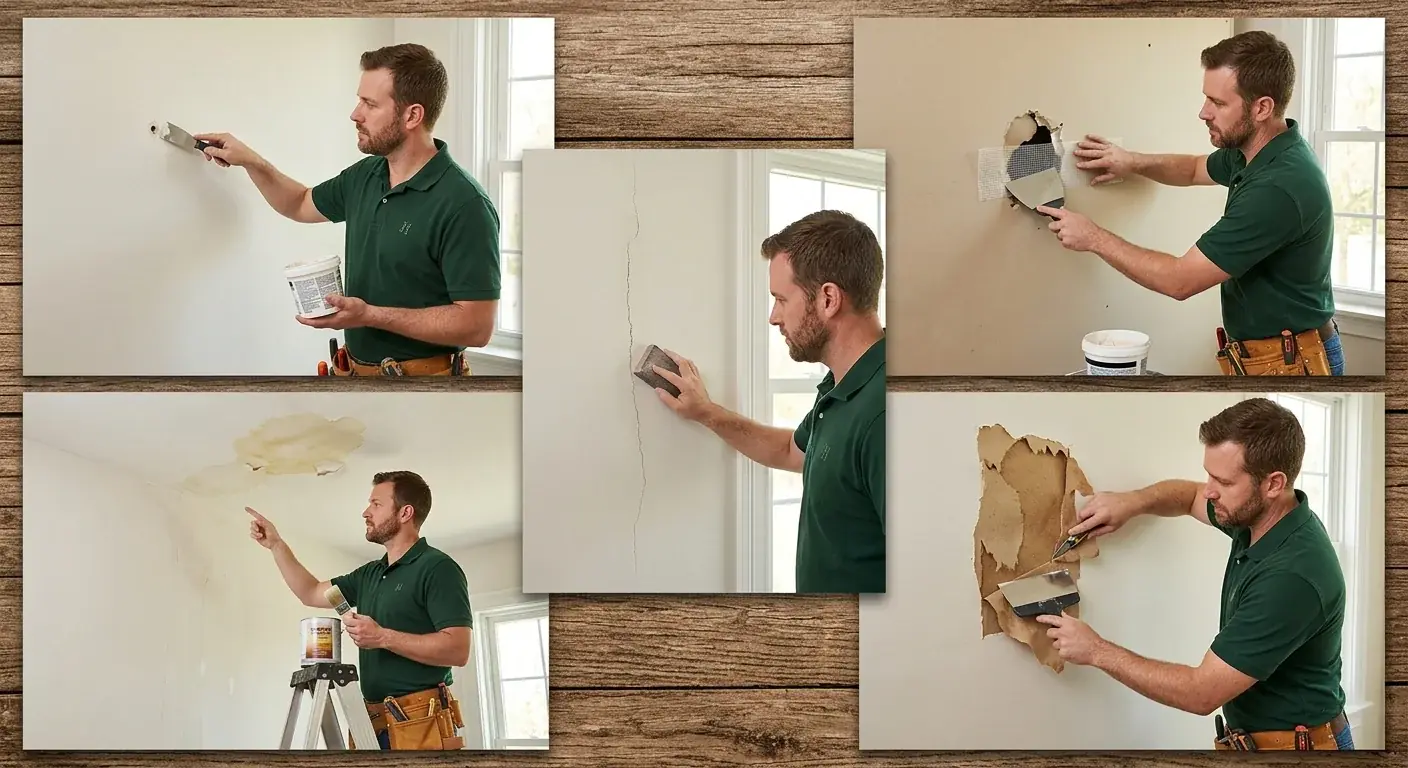
From minor dings to significant punctures, drywall damage can come from everyday wear, impacts, access work, movement, or moisture. This guide helps you describe five visible conditions and decide what needs inspection before a repair scope is set.
Understanding the visible condition is the first step. A photograph or crack pattern cannot establish every cause, and texture or paint blending should not be promised as invisible before the wall is inspected.
Small holes from nails and anchors
Small holes are probably the most frequent type of drywall damage homeowners encounter. They often come from hanging pictures, shelving, mirrors, or other decorative items. Even cable management clips can leave tiny marks. Sometimes, removing old fixtures reveals a scattering of these small perforations. While these might seem minor, a collection of them can make a wall look cluttered and neglected. Improperly removed picture hooks can also tear the paper facing, making the repair slightly more complex than just filling a clean hole.
The repair method depends on the opening and the selected product’s instructions. A pro may prepare loose edges, apply a compatible filler or supported patch, and sand the area after it dries. The written scope should state whether it includes primer, texture, and paint, and where each finish will stop.
Doorknob-sized holes and punctures
These larger holes are a more noticeable form of damage, often resulting from sudden, forceful impacts. The most common culprit is a doorknob repeatedly striking the wall behind it because of a missing or improperly installed doorstop. Moving furniture, kids playing rambunctiously, or an accidental bump with a tool can also create these frustrating punctures. Unlike small holes, doorknob-sized damage typically involves a complete breach of the drywall panel, often leaving jagged edges and requiring a more substantial repair.
Repairing a doorknob-sized opening usually needs more support than simple spackle. Depending on the condition, the pro may cut back to stable material, add backing, fit a drywall insert, treat the seams, and finish the surface. Ask how the pro plans to blend the existing paint and drywall texture without assuming the result will be invisible from every angle.
Stress cracks and settlement lines
Cracks in drywall can range from thin lines to broader branching patterns. They may appear near door frames, windows, seams, or wall-to-ceiling transitions. Their location alone does not establish settlement or a structural cause. Record whether a crack changes, and seek an appropriate evaluation when it is widening, recurring, or accompanied by other movement.
A matched independent pro can quote crack repair by severity. For minor hairline cracks they may clean the area, then apply flexible caulk or a thin layer of joint compound and feather it out. For larger cracks they may apply fiberglass mesh tape before joint compound. Ask whether the quote includes sanding, primer, and paint. If the pro thinks the cracks may relate to movement in the structure, they should say so before cosmetic work starts, so you can get a separate evaluation.
Water damage from slow leaks
Water damage is one of the most insidious types of drywall damage because it often starts unseen and can lead to significant issues like mold if not addressed promptly. In San Diego homes, slow leaks from plumbing pipes behind walls, leaky roofs, or even condensation buildup from HVAC systems are common culprits. The signs typically manifest as discoloration (yellow or brown stains), bubbling or peeling paint, and soft, spongy areas in the drywall. You might also notice a musty odor. Ignoring water damage can compromise your home’s structural integrity and create unhealthy living conditions.
When drywall is water-damaged, the leak source has to be identified and stopped before a drywall patch will last. Have a qualified plumber address pipe leaks. The EPA WaterSense program offers resources for preventing leaks and conserving water. Once the area is dry, a matched independent pro can cut out affected drywall, install new board, tape and mud the seams, then sand, prime, and paint to match. Ask the written quote to say how far they will cut back. For more on this issue, see drywall water damage repair in San Diego.
Damage from removing old fixtures or tile
Renovations and upgrades often leave their own unique mark on your drywall. When you remove old lighting fixtures, shelving units, wall-mounted TVs, cabinets, or especially old tile, the underlying drywall can suffer. This damage might include torn paper facing where adhesive was strong, uneven surfaces where plaster or thin-set mortar was applied, or large, irregular holes where fixtures were anchored. Removing old tile, for instance, often pulls chunks of the drywall’s paper and gypsum core with it, creating a rough, uneven surface that’s challenging to repair smoothly.
A matched independent pro can quote wall prep after fixture or tile removal. For minor paper tears or residue they may skim-coat with joint compound, then sand. For larger holes or exposed core they may cut out the damaged section and install a new piece, similar to a doorknob-hole patch. Ask whether the quote includes a paint-ready surface. For quote factors, see drywall repair cost in San Diego.
When to call
Larger holes, water-damaged sections, and prominent texture boundaries can benefit from professional review. A matched independent pro can inspect the visible damage and quote a defined patch, texture, primer, and paint scope. Call us at (858) 400-4611 and we’ll match you with a pro who can quote the job.
Would you rather hand this one to a pro than do it yourself? Call (858) 400-4611.
Request a quote