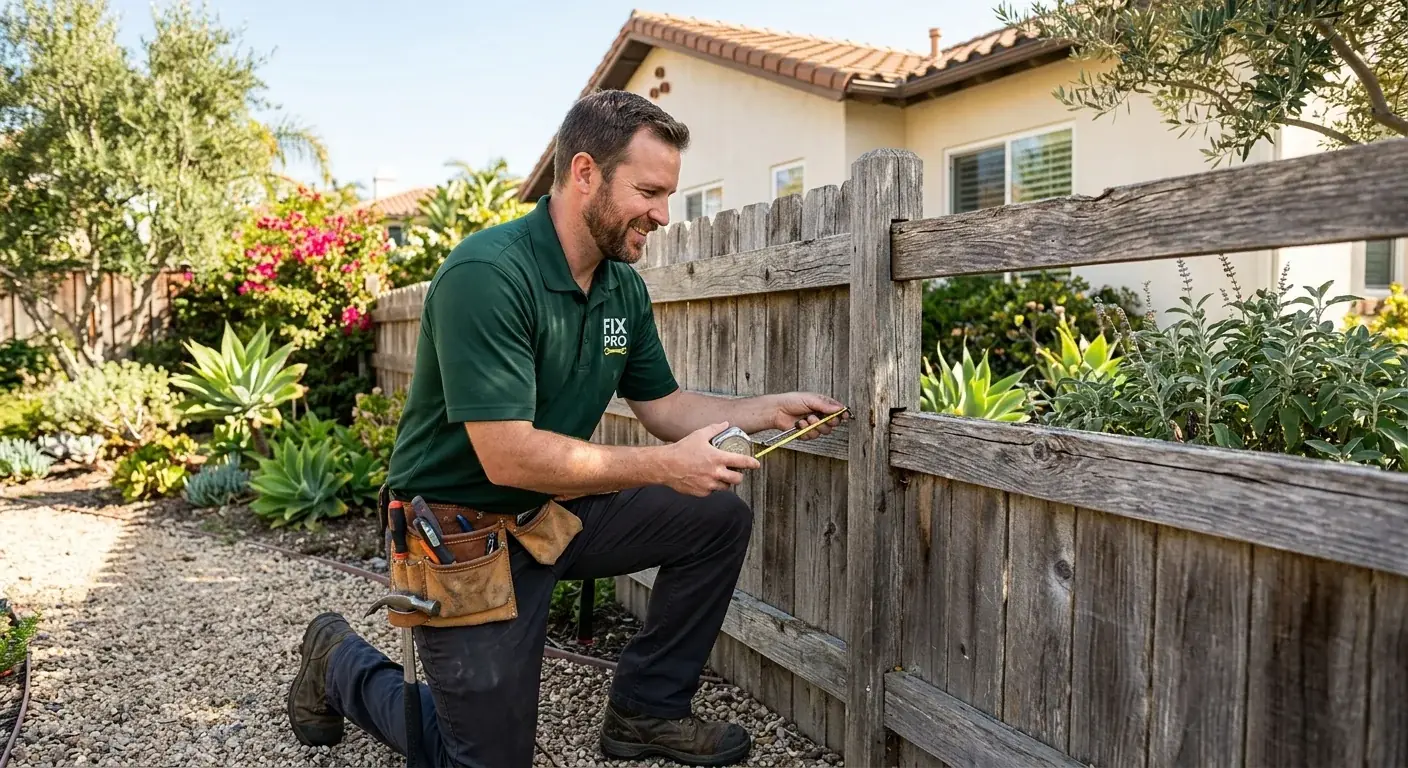
A damaged fence isn’t just an eyesore; it’s a security risk and can impact your home’s curb appeal. If you’re a San Diego homeowner facing a leaning post, a broken picket, or a sagging gate, ask for a written quote. Fix Pro San Diego does not publish a fence price menu.
Fix Pro San Diego matches homeowners across the county with independent local professionals. This guide explains what changes a fence quote.
What to put on a San Diego fence quote
Fence repair quotes in San Diego vary with material, the extent of the damage, and access. Small jobs, like replacing a few pickets or fixing a latch, sit at one end. More extensive repairs, such as replacing several posts or a large section of fencing, sit higher. Ask the quoting professional for a written number on this fence.
For wood fences, name individual boards, a sagging section, and a rotted post as separate lines. Vinyl fences can have specialized components. A handyman will assess the specific damage. Difficult access or extensive material removal can change the ticket.
Wood fence repair by the foot
When a fence section is beyond spot repair, replacing a linear run of fencing is often necessary. This is especially true for long stretches of damaged panels or multiple broken pickets. Ask whether the quote is per linear foot or a flat section ticket, and whether it includes materials and labor.
Break that down:
- Replacing individual pickets: wood type and height
- Replacing a full panel section (e.g., 6-8 feet long): removing the old section, installing new posts if needed, and setting new panels. Basic pressure-treated pine is usually a different material line than redwood or cedar. Fence height (standard 6-foot vs. 8-foot privacy) also changes material and labor.
What fixing a leaning fence post involves
A leaning fence post is a common issue in San Diego, often caused by soil erosion, rot at the base, or simply years of wear and tear. Addressing it quickly is crucial to prevent further damage to your fence line. The quote depends on whether the post can be salvaged or if it needs full replacement.
- Re-setting a loose post: If the wooden post itself is still sound but the concrete footing has failed or the post has simply come loose, it can often be re-set. This involves digging out the old concrete, re-anchoring the post, and pouring new concrete.
- Replacing a rotted or broken post: When the post is decayed, cracked, or severely damaged, replacement is the only option. This is a more involved process, requiring the removal of the old post and concrete, installation of a new post, and pouring a fresh concrete footing. If multiple posts need replacement along a single fence line, ask whether that changes the per-post line. Proper post installation, including adequate concrete depth and drainage, is key to long-term stability in San Diego’s climate.
Gate repair vs. replacement
Fence gates endure much more wear and tear than the rest of the fence, making them prone to issues like sagging, broken latches, or damaged hinges. The decision between repairing and replacing a gate depends on the extent of the damage to its frame and panels.
Gate repair tickets:
- Adjusting hinges or latches
- Replacing hinges or latches
- Fixing a sagging gate: diagonal braces or tension cables
- Replacing a few pickets or boards
Gate replacement tickets: If the gate frame itself is warped, rotted, or severely damaged, replacement is usually the better long-term solution.
- Standard wood walk-through gate: frame, hardware, and installation
- Larger or custom gates: wider gates, double gates, wrought iron, or composite
Factors that change a fence repair quote
Several elements can push a San Diego fence quote above a simple picket swap. Being aware of these helps you read the written scope.
- Material Choice: Premium materials like redwood, cedar, or certain types of vinyl and composite fencing are more expensive than standard pressure-treated pine. If your existing fence is made of these, repair costs will reflect that higher material expense. Similarly, ornamental iron fences require specialized welding and painting, driving up labor and material costs.
- Extent and Location of Damage: Widespread rot, extensive pest damage, or damage across multiple sections of the fence will naturally cost more than a localized repair. If damage is in a difficult-to-access area (e.g., behind dense landscaping, on a steep slope, or in a tight corner), it adds to labor time and complexity.
- Permit Requirements: Confirm current permit treatment with your city or county. Do not treat minor repairs as automatically permit-free. Extensive structural changes or replacing a significant portion of a fence can be a different ticket. You can verify licensed contractors on the CSLB website.
- Debris Removal: If large sections of the old fence need to be removed and hauled away, this service will be an additional cost, often built into the labor fee.
- Site Preparation: Sometimes, the area around the fence needs clearing or minor landscaping work before repairs can begin, which can add to the total bill. This might include trimming overgrown bushes or leveling uneven ground.
- Urgency: After-hours or emergency timing is a term the quoting professional sets. Fix Pro does not promise prompt service or a brand after-hours fee. See deck and fence repair matching.
When is replacing the whole fence cheaper?
It might seem counterintuitive, but sometimes, replacing your entire fence can be a more cost-effective decision in the long run than continuous repairs. This is especially true for older fences in San Diego that have widespread issues.
Consider full replacement if:
- Widespread Damage: If a large share of your fence posts or panels are damaged, rotted, or leaning, the cumulative cost of individual repairs can quickly approach or exceed the cost of a new fence. Patching one section only to have another fail a few months later becomes inefficient.
- Advanced Age: Most wood fences have a lifespan of 15-20 years in San Diego’s climate, even with good maintenance. If your fence is reaching this age, its structural integrity is likely compromised throughout, making repairs a temporary fix. You might experience recurring issues.
- Multiple Leaning Posts: If several posts along your fence line are leaning or rotten at the base, it indicates systemic issues with the fence’s foundation. Replacing all these posts individually can be nearly as expensive as installing a new fence with fresh, properly set posts.
- Sagging or Deteriorating Sections: Beyond individual pickets, if entire sections of your fence are severely warped, sagging, or showing significant material degradation from sun, water, or pests, a full replacement often buys a uniform line.
- Aesthetics and Property Value: A new, well-built fence significantly enhances your home’s curb appeal and can add value, especially in competitive San Diego real estate. A patchwork of repairs often doesn’t achieve the same visual impact.
For a deeper dive into deciding between fence repair and replacement in San Diego, check out our detailed guide. It offers more insights to help you make the best decision for your property and budget.
When a matched pro should inspect
If the fence itself is fine and it’s just the gate sagging or sticking, the gate repair guide for San Diego covers anti-sag kits, hinge fixes, and when a gate is worth rebuilding. When your fence needs more than a quick DIY fix, or if you’re unsure about the extent of the damage, ask for a written quote. Call (858) 400-4611. Fix Pro San Diego matches homeowners with independent local professionals who quote after they see the fence.
Would you rather hand this one to a pro than do it yourself? Call (858) 400-4611.
Request a quote