Homeowners hunting for average interior painting cost San Diego usually want one county number. San Diego County does not publish that figure, and this site does not invent one. The quote moves with the rooms, the repairs, the sheen, the color change, and whether people still live in the house.
Fix Pro San Diego is a referral service. We match you with licensed, independent local pros for interior painting. We do not paint, set rates, or hold a contractor license. Confirm current rates with the pro who walks the rooms. Use the checklist below so two proposals describe the same job.
List every room and surface in the request
A 1,000-square-foot bungalow in Encinitas is not the same paint map as a 1,000-square-foot loft downtown. Floor area is a starting note. Painters bid walls, ceilings, doors, and trim, not the carpet plan.
Write every room by name. Living room, hallway, primary bedroom, kids’ rooms, kitchen, baths, stairwell, and garage interior if that is in play. Mark rooms you are skipping. A “whole house” bid that quietly leaves out closets or the laundry will not match a bid that includes them.
Then list surfaces in each room. Walls only is one job. Walls plus ceiling is another. Add baseboards, crown, window casings, door slabs, and door jambs as separate lines. A craftsman in Kensington or North Park can carry more linear feet of trim than a newer tract home in Otay Ranch. A Clairemont split-level adds a stairwell with more cut-in work than a single-story ranch in El Cajon.
Note ceiling height in plain terms. Standard rooms, a vaulted living room in Scripps Ranch, or a two-story entry all change ladder and staging time. You do not need a laser. You do need the same height note on every request.
Photograph each room from two corners. Capture the ceiling line, the baseboard, and any built-ins. If you want a shared method for that step, use the same photo habit we outline for repairs before quotes. Send the list and the photos with every request so nobody is guessing from a hallway snapshot.
Condos in Mission Valley and Carlsbad add one more line: common-area rules. Some buildings limit hallway use, elevator pads, or work hours. Put those rules on the request. The painter is bidding access as much as paint.
Kitchen and bath walls still count as interior paint. Cabinets are a different scope. If you want cabinet faces refinished, say so in a separate line. Mixing cabinet work into a wall bid is a common way two numbers stop being comparable.
Keep exterior work off this list. Stucco, fascia, and garage doors belong on an exterior request. Mixing them into an interior quote is how a “house painting” number becomes impossible to read.
Separate wall repair from painting work
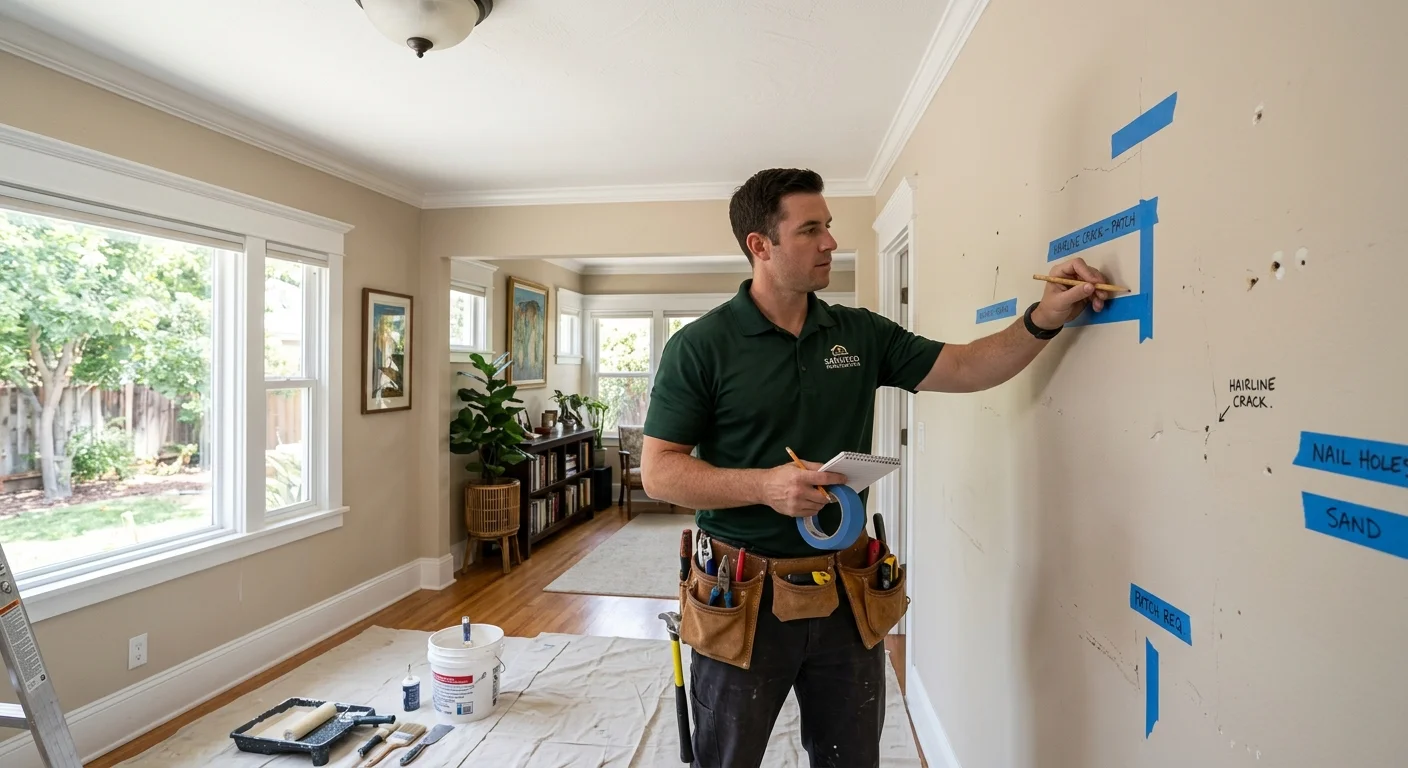
Paint hides almost nothing on close inspection. Nail pops, picture-hanger holes, hairline cracks, and old patches show through a fresh coat. In older plaster in Golden Hill, South Park, and parts of Ocean Beach, the wall may need more than a wipe-down. Newer drywall in 4S Ranch or Chula Vista’s later tracts often needs less repair, until a TV mount or a moved furniture layout leaves a cluster of holes.
Ask each pro to price repair as its own line. Patching, sanding, texture match, and priming are not the same as rolling a finished wall. If the repair line is missing, you cannot tell whether the bid assumes perfect walls.
City of San Diego Information Bulletin 203 lists some drywall patches (up to 100 square feet, tied to electrical, mechanical, or plumbing repairs) as work that does not need a building permit, except on designated historical resources or in historic districts. That is a permit note, not a price. Other cities in the county write their own rules. If the work is more than paint, or you are not sure, check with the city that issues permits for the property. City of San Diego filings go through Development Services.
Do not fold a water-stained ceiling into “just paint” without saying so. Stains, soft drywall, and texture mismatch after a leak belong on the repair line first. For the paint that follows a patch, read interior paint after drywall repair. The short version: a patched rectangle that is not primed and blended will print through, even when the color is right.
In older rooms, ask the pro how they will prepare, sand, and scrape existing paint. Confirm any extra requirements with the city or county that governs the property. Do not guess from the look of the walls.
If the wall work is the real project and paint is the finish, treat drywall repair as the first scope. Then paint. One written repair line plus one written paint line is easier to compare than a single lump sum labeled “walls.”
Record sheen, color, trim, and ceilings
Sheen changes labor and material use. Flat or matte on a bedroom ceiling is a different product and a different wipe-down standard than eggshell in a hallway or a washable finish in a kids’ bath. Write the sheen you want on walls, on ceilings, and on trim. If you do not care yet, say you want the pro to recommend one sheen per surface and name it in the bid.
Color count matters more than the brand name on the can. One color through all walls is one material plan. An accent wall in the living room, a deeper hallway, and a separate bath color is three plans. A dark-to-light change usually needs more coverage than a refresh in a similar value. Ask the bid to state primer, number of finish coats, and whether ceilings are included.
Trim is where bids drift. Some painters include baseboards. Some paint door slabs only if you list them. Window sashes, especially in older North Park and Coronado wood windows, take more cut-in time than a vinyl replacement window in Mira Mesa. Write “paint all interior doors, both sides and edges” if that is what you want. Write “leave doors” if you do not.
Ceilings need their own yes or no. Popcorn, orange peel, and smooth drywall do not bid the same. If you are only painting walls under an old texture, say the ceiling stays. If a stained bathroom ceiling is in the job, call it out. Skip product-life claims. Ask what product the pro plans to use on that surface, and keep the leftover can labeled for later.
Touch-ups after the job are not a substitute for a full room. If you only need spots blended, that is a smaller request, and it often fails on sun-faded walls. For why a dab from last year’s can still flashes, see interior paint touch-ups that don’t match. Put “full rooms” or “spot blend only” on the quote so you are not paying for one while expecting the other.
Do not let the bid say “standard paint” with no sheen, no color count, and no coat count. That phrase is not a scope.
Plan furniture, access, and occupied rooms
Labor time is not only brush work. A furnished Pacific Beach rental, a packed Escondido family room, and an empty house between owners are three different setups. Say what will still be in the room on paint day.
List who moves furniture. If the household will empty closets and pull beds to the center, write that. If the pro must shift sofas, desks, and a wall of books, write that. Leave a path from the curb or garage to each room. Tight stairs in an older Normal Heights cottage are not the same as a wide foyer in Carmel Valley.
Occupied rooms change the sequence. A home office that cannot go dark for two days, a nursery, or a roommate still using the hallway should be named. Pets need a closed door plan. This is not about speed promises. It is about whether the painter is bidding around your calendar or assuming a vacant shell.
Parking and building access belong on the same page. Alley-loaded South Park houses, gated communities in Rancho Bernardo, and high-rises with loading docks all add setup. If the painter cannot park a vehicle near the entry, say so.
Ceilings and stairwells need a clear access note. A two-story great room in Scripps Ranch is not a bedroom with an eight-foot plate. If a room needs scaffolding or a lift, the bid should say that equipment is included or excluded.
How long the work itself takes depends on this same list: rooms, coats, repairs, and whether you are living in the space. For sequencing, not for a guaranteed calendar, read how long interior painting takes. Put your constraints in writing before anyone prices the job.
If you will stay in the house, decide which bathrooms and which kitchen walls can be out of use, and for which days. A bid that assumes all rooms at once will not match a bid that paints two rooms, then two more.
Use the same scope when comparing proposals
The useful question is not “what is the average.” It is whether three written proposals describe the same rooms, the same repairs, the same sheen, and the same access. CSLB tells consumers to get at least three written bids and to be wary of a bid that sits far below the others. Verify the license on CSLB’s license check before you sign.
California’s minor-work exemption in Business and Professions Code section 7048 applies only to casual, minor, or inconsequential work with an aggregate price under $1,000 for labor, materials, and all other items, and only when the work does not need a building permit. It does not apply when the work is part of a larger operation, when jobs are split to stay under the line, when someone advertises as a contractor, or when they employ others to do the work. Price alone is not permission. CSLB also tells consumers that licensing is required for projects that need a permit, use employee labor, or cost $1,000 or more. A whole-home interior paint request often sits in licensed territory. Confirm the license class against the actual scope.
CSLB also caps a home-improvement down payment at 10% of the contract price or $1,000, whichever is less. Written contracts should describe the work, materials, and timeline. Change orders should be in writing and signed. Those are hiring rules, not paint science.
Line up the bids in a table you keep yourself. Rooms included. Ceilings yes or no. Trim and doors. Repair line. Primer and coat count. Who moves furniture. Who supplies paint. Cleanup. What happens if a hidden crack shows up after sanding. The lowest number is not the same job if it skips the stairwell you thought was included.
This site has no verified San Diego per-room or per-square-foot paint price in its claims ledger, so we will not invent one for a 1,000-square-foot house, a single bedroom, or a gallon of paint. National roundups and calculator sites are not a county rate. Confirm the current number with the pro standing in your rooms.
If two scopes still do not match, send both parties the same one-page list and ask them to rebid that list only. Do not average the two figures. Pick the scope you want, then compare.
When to call us
Hand the job to a pro when the request spans several rooms, needs wall repair before paint, or has to happen while you still live in the house. A single accent wall you can empty and prep is a different decision than a whole-floor color change with trim and ceilings. Call us at (858) 400-4611 and we’ll match you with a local pro who quotes the job before starting.
Would you rather hand this one to a pro than do it yourself? Call (858) 400-4611.
Request a quote